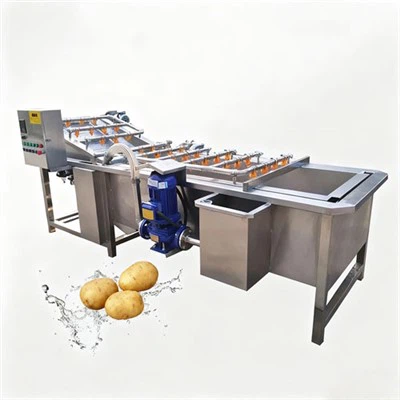
Product Description
The AGICO Onion Cleaning Machine is a continuous dry-processing system for topping and cleaning onion sets, ware onions, shallots, and echallions. Instead of washing the crop, it combines controlled vibration, suction, mechanical topping, and an integrated waste conveyor. This route is useful when the next stage requires a cleaner bulb without adding process water.
Two configurations are available. The AGICO-201 uses two cutting units and is referenced for 5–8 tonnes per hour, while the AGICO-301 uses three cutting units and is referenced for 7–10 tonnes per hour. Both machines use continuous conveyor feeding and a vibrating screen to move onions through the working zone.
Actual output depends on onion diameter, neck condition, soil load, moisture, screen selection, feed uniformity, and downstream capacity. AGICO therefore recommends confirming a representative raw-material sample and the required line rhythm before the final configuration is fixed.

How the Dry Cleaning System Works
The machine controls the crop through a visible mechanical route, making the main operating points easy to inspect and discuss during line planning.
Continuous Feeding
An even conveyor feed reduces surges. Operators should spread onions across the working width and avoid deep piles that hide undersized or damaged bulbs.
Vibrating Transfer
The vibrating screen advances and separates the crop. A screen selected for actual onion diameter supports stable transfer and removal of loose material.
Mechanical Topping
High-speed rotating blade-fans trim the tops as bulbs pass the cutting units. Feed rate and neck presentation influence the final topping result.
Separate Waste Route
Loose skins, tops, and debris leave through the integrated waste conveyor, keeping the product route distinct from removed material.
AGICO Technical Data and Model Selection
The following figures describe the OTW201 and OTW301 configurations. Select the model from sustained line demand and crop conditions rather than peak capacity alone.
| Parameter | AGICO-201 | AGICO-301 |
|---|---|---|
| Machine Type | Onion topper and dry cleaner | Onion topper and dry cleaner |
| Processing Capacity | 5–8 t/h | 7–10 t/h |
| Cutting Units | 2 | 3 |
| Waste Conveyor Motor | 0.75 kW | 0.75 kW |
| Vibration Motors | 2 × 0.45 kW | 4 × 0.45 kW |
| Feeding / Transfer | Continuous conveyor / vibrating screen | Continuous conveyor / vibrating screen |
| Cleaning / Topping | Dry vibration, suction, rotating blade-fans | Dry vibration, suction, rotating blade-fans |
| Waste Discharge | Integrated waste conveyor | Integrated waste conveyor |
| Screen Size | Selected for onion size | Selected for onion size |
| Installation | Standalone or grading-line integration | Standalone or grading-line integration |
Choose AGICO-201 When
The planned line is within the 5–8 t/h reference range and two cutting units match crop presentation and downstream pace.
Choose AGICO-301 When
A 7–10 t/h reference range and three cutting units are needed. Confirm receiving conveyors can accept the higher flow without accumulation.
Applications and Line Integration

Feed and Screen Matching
Define minimum, typical, and maximum bulb diameter. Mixed sizes can move differently across one screen, so the selected opening must suit the commercial crop.

Service and Inspection Access
The hinged enclosure supports inspection of the screen and cutting area. Installation space must allow safe opening, isolation, cleaning, and blade-fan service.

Grading-Line Integration
The cleaner can operate alone or within a grading line. Confirm infeed height, discharge direction, waste route, transfer width, and next-machine capacity.
Working Process and Control Points
Before Feeding
Remove stones, metal, and abnormal foreign material. Inspect for excessive moisture or soft decay. Establish a steady bed depth and keep the feed conveyor free from sudden dumps.
- Transfer: the conveyor delivers onions to the vibrating screen, where the crop is distributed and loose material begins to separate.
- Top and clean: suction and blade-fans remove tops and loose outer material as bulbs pass the cutting units.
- Separate: cleaned bulbs continue to product discharge while skins, tops, and debris follow the waste conveyor.
- Receive: the next conveyor or grader should accept sustained flow without creating a backup.
Cleaning, Inspection, and Maintenance
A dry process still requires disciplined sanitation. At the end of production, isolate electrical power, allow rotating parts to stop, and remove loose skins and crop residue from the screen, enclosure, cutting area, and waste conveyor. Use the cleaning method approved for the plant and protect motors, bearings, controls, and other electrical parts from inappropriate water exposure.
Daily inspection should cover guards, hinges, screen condition, conveyor tracking, unusual vibration, and the visible condition of rotating blade-fans. Worn or damaged cutting parts can reduce topping consistency. Maintenance intervals must follow the final machine manual and local safety procedures.
For a practical acceptance test, AGICO suggests recording onion size distribution, feed rate, removed-waste volume, percentage of acceptably topped bulbs, product damage, and downstream flow. These measurements turn a visual trial into a repeatable production reference.
Practical Production Planning
Raw material should arrive within the agreed diameter range and with reasonably consistent neck length. Very wet onions, heavy adhering soil, sprouting bulbs, or soft damaged crop may require additional sorting or a slower feed. The operator should first establish a conservative setting, inspect a timed sample, and then increase the rate only while topping quality and bulb damage remain acceptable.
Line integration deserves the same attention as the cleaner itself. The infeed must prevent uncontrolled drops, while the product discharge and waste conveyor need clear receiving paths. Allow room for the hinged cabinet to open fully and for maintenance staff to reach the cutting units without moving adjacent equipment. Before shipment, the buyer should confirm electrical supply, control handshakes, emergency-stop responsibility, product-flow direction, discharge height, and the location of waste containers. A documented trial using the buyer's own onions gives both parties a realistic reference for capacity, cleanliness, topping result, and product loss.
Frequently Asked Questions
Hot Tags: onion cleaning machine, China onion cleaning machine manufacturers, suppliers, factory