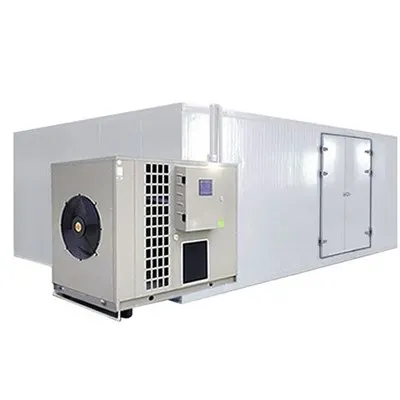
Industrial Continuous Food Drying Production Line
Automated Dehydration and Processing System for Food Manufacturers, Wholesalers, and Processors Certified Quality & Global Compliance: CE, ISO9001, and FDA/USDA Food-Contact Standards
This industrial continuous drying production line is engineered for food processors requiring continuous, automated dehydration with precise control over temperature, airflow, conveyor speed, and residence time. It is built for raw materials that demand strict moisture reduction, including fruits, vegetables, herbs, spices, mushrooms, meat, seafood, and nuts.
By replacing traditional manual tray handling and isolated batch dryers, this system integrates feeding, conveying, multi-stage drying, cooling, and discharge into a single continuous process. The line can also interface directly with upstream and downstream equipment-such as washing, slicing, blanching, sorting, and packaging machines-based on your factory's specific workflow.
Core Operational Problems Solved
Uneven Moisture Distribution
- The Problem: In conventional batch trays, peripheral areas receive different heat and airflow than center zones, leading to overdried edges and moist cores.
- Our Solution: A continuous-pass conveyor combined with zoned air circulation. Conveyor speed, sectional temperatures, and airflow rates can be adjusted across multiple drying zones to ensure uniform moisture removal across the entire bed.
High Labor Intensity & Operational Cost
- The Problem: Traditional batch drying requires manual tray loading, cart movement between stages, manual unloading, and constant supervision.
- Our Solution: The line automates material transfer from feeding to discharge. Processing several tons of raw material per day requires significantly fewer operators, transforming labor-heavy handling into a continuous mechanical flow.
Production Bottlenecks & Downtime
- The Problem: Batch processing creates dead time between loading, heating cycles, cooling, and unloading, making it difficult to maintain steady daily output.
- Our Solution: Continuous feeding allows wet material to enter one end while dried product discharges steadily from the other, stabilizing factory output for commercial supply chains.
Difficulty Controlling Final Moisture & Water Activity (a_w)
- The Problem: A fixed operating temperature does not guarantee a consistent final moisture percentage. Furthermore, total moisture content does not account for product stability.
- Our Solution: Systems are configured around the drying curve of the specific product. For food preservation, water activity (a_w)-the measure of available water for microbial growth-is factored alongside total moisture content to comply with food safety standards (such as FDA and USDA guidelines) and ensure storage stability.
Key Technical Features
Continuous Material Flow
- Process Sequence: Raw Material Feeding -> Continuous Conveyor -> Zoned Drying -> Cooling -> Discharge -> Packaging
Mechanical feeding and discharge mechanisms maintain a steady mass flow, eliminating production gaps between stages.
Multi-Stage Temperature & Airflow Zoning
Dehydration rates change as moisture leaves the product. The drying chamber is divided into independent thermal zones:
- Initial Zone: Rapid surface moisture removal without case-hardening.
- Intermediate Zone: Steady-state internal moisture diffusion.
- Final Zone: Precision moisture adjustment and final cooling/conditioning.
Variable-Speed Conveying System
Residence time inside the drying chamber is controlled by adjusting the conveyor speed. This allows operators to adapt the system to changes in raw material thickness, initial moisture, and target final specs without mechanical modifications.
Controlled Hot-Air Recirculation & Energy Efficiency
Industrial-grade blowers and directional baffles direct heated air uniformly across the product bed.
- Advanced Heat Recovery System: Integrated waste-heat recovery units preheat incoming fresh air, significantly lowering energy consumption (COP) and reducing factory carbon footprints to meet stringent European and North American environmental mandates.
Hygienic, Food-Grade Construction & Global Standards
- Material Specifications: Product-contact surfaces are fabricated from food-grade stainless steel (SS304 or SS316L, specified per project requirements).
- Design Standards: Smooth internal finishes, accessible clean-out inspection doors, sloped internal drainage points, and modular conveyor components designed for quick washdown and sanitation. Certified under CE and ISO9001 quality frameworks.
Global Support, Commissioning & After-Sales Service
Backed by remote PLC diagnostics for real-time troubleshooting, comprehensive operator training modules, and optional on-site overseas installation and commissioning by certified engineers to eliminate cross-border operational risks.
Suitable Applications & Configurations
|
Product Category |
Common Applications |
Special Process Considerations |
|
Fruits |
Apple slices, mango, pineapple, banana, strawberry, citrus peel |
Sugar content, shrinkage behavior, and anti-browning pre-treatment. |
|
Vegetables |
Carrots, onions, garlic, ginger, chili, mushrooms, potatoes |
Slice thickness, enzymatic blanching requirements, and rehydration ratio. |
|
Herbs & Spices |
Leafy herbs, tea-grade botanicals, pepper, seasoning ingredients |
Low-temperature preservation of volatile aromatic compounds and color retention. |
|
Meat & Seafood |
Beef jerky, poultry strips, fish, shrimp, pet food ingredients |
Strict pathogen reduction validation, fat rendering control, and water activity targets. |
Typical Production Line Integration
Fruit & Vegetable Line: Washing -> Slicing/Dicing -> Blanching -> Dewatering -> Automatic Feeder -> Continuous Multi-Stage Dryer -> Cooling Conveyor -> Visual Sorting -> Packaging Machine
Custom Industrial Line: Configured directly to match available factory floor space, existing upstream machinery, and local utility inputs (electricity, steam, natural gas, biomass, or thermal oil).
Technical Parameter Reference
|
Parameter |
Specification Options |
|
Operation Mode |
Continuous automatic execution |
|
Heat Sources |
Electric, Steam, Natural Gas, Biomass, or Thermal Oil heat exchangers (with optional waste-heat recovery) |
|
Control Interface |
PLC with touchscreen HMI (programmable recipes for different products, supports remote diagnostics) |
|
Conveyor Type |
Stainless steel mesh belt, perforated plate, or multi-tier cascading belt |
|
Temperature Range |
Ambient to 120 C (customizable for high-temp applications) |
|
Material Grade |
SS304 / SS316L for food contact; structural carbon steel with protective coating for frames |
|
Compliance & Certifications |
CE, ISO9001, FDA/USDA Compliant Design |
Information Required for Equipment Sourcing
To engineer a drying system matched to your production targets, please provide the following parameters:
Product Name & Form: (E.g., raw whole, sliced to 3mm thickness, diced, or pureed)
Initial Moisture Content: (%)
Target Final Moisture or Water Activity (a_w):
- Required Production Capacity: (Input wet weight in kg/h or tons/day)
- Daily Operating Hours: (E.g., 16 hours/day)
- Preferred Heat Source: (Steam, electricity, gas, biomass, etc.)
- Available Factory Dimensions: (Length x Width x Height limits)
- Upstream/Downstream Integration & Services: (Whether you need feeding/packaging machines included, and if overseas installation/commissioning is required)
Frequently Asked Questions
Q: What foods can be processed by an automatic drying production line?
A: The line can be configured for fruits, vegetables, herbs, spices, mushrooms, meat, seafood, nuts, and other products requiring controlled dehydration. The actual dryer configuration depends on the material's moisture content, shape, thickness, heat sensitivity, and target final moisture.
Q: Is the drying production line fully automatic?
A: It can be designed for automatic feeding, conveying, drying control, and discharge. The actual automation level depends on the customer's production process, layout constraints, and budget.
Q: Can the drying temperature be adjusted?
A: Yes. Temperature control can be configured according to the drying characteristics of the product. Multi-stage drying can also be used when different stages require different operating conditions.
Q: Can the conveyor speed be adjusted?
A: Yes. Adjustable conveyor speed allows the residence time to be modified according to product thickness, moisture content, loading density, and target drying result.
Q: How do you determine the production capacity?
A: Capacity should be calculated from the actual product rather than from the machine dimensions alone. Important factors include raw material input, initial moisture, final moisture, product thickness, loading density, drying temperature, airflow, and required drying time.
Q: Can you design the complete food processing line?
A: Yes. The drying section can be integrated with upstream and downstream equipment such as washing, cutting, blanching, dewatering, cooling, sorting, weighing, and packaging equipment.
Hot Tags: automatic drying production line, China automatic drying production line manufacturers, suppliers, factory