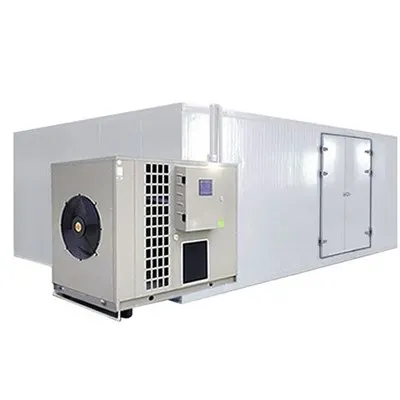
Continuous Industrial Belt Dryer
High-Capacity Continuous Drying Equipment for Controlled Moisture and Industrial Food Processing
The Continuous Industrial Belt Dryer is engineered for continuous moisture reduction in high-volume food processing applications, replacing traditional batch-tray systems and manual handling. The system continuously conveys food products through a multi-stage drying chamber, utilizing optimized forced hot-air circulation to achieve precise moisture targets at scale.
Configurations-including belt structure, mesh density, residence time, airflow velocity, and heating sources-are custom-engineered to match specific food physical properties, production capacities, and factory footprints.
Target Applications
Dehydrated Vegetables: Carrot slices, onion, garlic, potato, mushroom, green beans, bell peppers, cabbage, and leafy herbs.
Fruit Processing: Apple slices, banana chips, mango, pineapple, strawberry, and peach pieces.
Botanicals & Ingredients: Spices, tea leaves, botanical extracts, and aromatic plant materials.
Aquatic Products: Small fish, shrimp, and prepared marine ingredients.
Snacks & Grains: Extruded snacks, pasta, cereal grains, food pellets, and pet-food ingredients.
Engineering & Operational Principles
1. Controlled Product Feeding
Material is continuously fed onto the conveyor via an integrated spreading mechanism to maintain a uniform bed depth. Maintaining consistent product thickness prevents localized variations in drying resistance and ensures uniform thermal transfer across the entire belt width.
2. Variable-Speed Conveying & Residence Time
The conveyor belt transports the product through the drying chamber at a regulated speed, dictating the total residence time.
- Lower belt speeds provide extended exposure for high-moisture or thick-profile materials.
- Higher belt speeds maximize throughput for pre-dried or thin-profile products that reach target moisture rapidly.
3. Multi-Zone Thermal Management
To prevent surface hardening (case hardening) and preserve product color, structure, and flavor, the drying chamber is divided into independently controlled temperature zones:
Initial Zones: Higher thermal energy and airflow focus on rapid free-moisture evaporation.
Final Zones: Lower temperatures and adjusted humidity provide gentle bound-moisture removal, preventing thermal degradation.
4. Forced Air Circulation & Exhaust Control
Heated air is continuously re-circulated through or across the product layer. Air velocity, static pressure, and exhaust humidity are regulated to optimize thermal efficiency and prevent moisture saturation within the chamber.
Key Technical Specifications & Configurations
|
Parameter |
Specification Options |
|
Dryer Type |
Continuous hot-air belt dryer (Single-layer or multi-layer configurations) |
|
Conveyor System |
Perforated stainless-steel mesh, flat wire belt, or Teflon-coated mesh (selected per product type) |
|
Heating Sources |
Steam, hot water, natural gas, LPG, thermal oil, electric elements, or industrial heat pumps |
|
Drying Zones |
2 to 6 independent temperature and airflow regulation zones |
|
Temperature Range |
Adjustable from 40°C to 120°C (depending on product tolerance) |
|
Construction Material |
Product-contact areas in SUS304 or SUS316L stainless steel; heavy-duty structural frame in carbon steel with sanitary cladding |
|
Drive & Control System |
Variable-frequency drive (VFD) motor for precise belt-speed control; optional PLC + HMI touchscreen automation |
System Integration & Factory Layout
The continuous dryer interfaces directly with upstream and downstream processing equipment to form a seamless production line:
Washing -> Cutting / Slicing -> Blanching -> Continuous Feeding -> Belt Dryer -> Cooling Section -> Packaging
Cooling Integration: An optional terminal cooling section drops product temperatures prior to packaging, preventing condensation inside sealed containers.
Footprint Optimization: Multi-layer belt configurations multiply the effective drying area within a compact horizontal floor space, suitable for high-capacity facilities with spatial constraints.
Engineering Data Required for Equipment Sizing
Because drying performance depends on product density, initial moisture, thermal sensitivity, and evaporation load, capacity cannot be standardized by weight alone. Accurate equipment sizing requires the following parameters:
Specific food type, variety, and physical dimensions (slices, cubes, strips, etc.).
Initial moisture content (%) and target final moisture (%) or water activity (aw).
Wet input capacity (kg/h) or target dry output requirement.
Preferred heating medium (steam pressure, gas type, electrical capacity) and available factory floor space.
Continuous Food Dryer FAQ
Q: What is a Continuous Food Dryer?
A: An industrial drying machine that continuously transports food products through a controlled drying chamber while heated air removes moisture. Unlike batch tray dryers, it supports uninterrupted material flow and integrates smoothly into automated industrial lines.
Q: What foods can be dried in a continuous dryer?
A: Typical applications include vegetables, fruits, herbs, mushrooms, seafood, selected meat products, grains, food ingredients, snack products, and other materials that require controlled hot-air drying. The actual suitability depends on the product's moisture content, size, texture, heat sensitivity, and required final moisture.
Q: What is the capacity of a continuous food dryer?
A: Capacity depends on the product and drying requirement rather than the machine alone. Important factors include initial moisture, final moisture, product thickness, bulk density, drying temperature, residence time, and required water evaporation rate (kg/h). For this reason, capacity should be confirmed after reviewing the product and process conditions.
Q: How long does food take to dry?
A: There is no single drying time for all foods. Residence time may range from relatively short periods to several hours depending on the product and target moisture. Belt speed, dryer length, temperature, airflow, product thickness, and loading density all influence the required time. A production test in our lab is recommended for establishing the actual process.
Q: Can the drying temperature be adjusted?
A: Yes. The drying temperature can be configured and multi-zoned according to the exact product and process requirements.
Hot Tags: continuous food dryer, China continuous food dryer manufacturers, suppliers, factory