Product Description
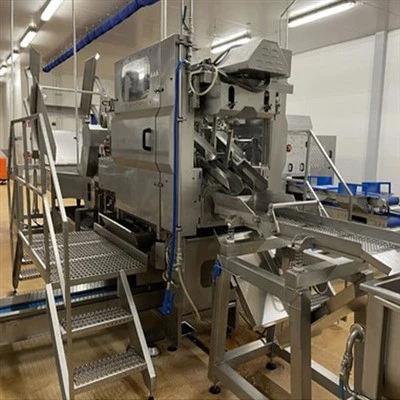
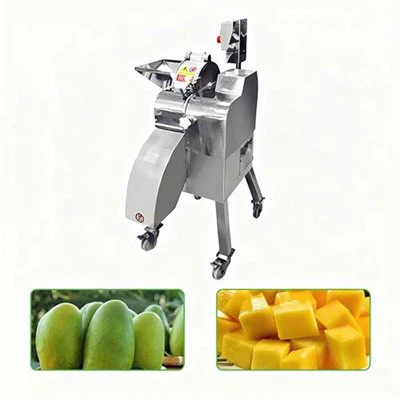
This strawberry dicer is a continuous industrial cutting machine designed to turn prepared strawberries and other fruits or vegetables into defined cubes. Material enters through the hopper, passes through the installed cutter set, and leaves by gravity through the stainless-steel discharge chute. The cutter set-not an electronic setting-determines the nominal piece size, so the required cut should be agreed before production.
Strawberries need more process control than firm root vegetables. Ripeness, temperature, variety, moisture, and handling pressure can change the proportion of intact pieces, fines, and expressed juice. At AGICO, we recommend evaluating representative fruit and defining the acceptable finished-piece range before confirming a cutter. The published 2,000–3,000 kg/h capacity is a model rating; actual output depends on raw material, feed continuity, cutter condition, and downstream handling.
AGICO Technical Data
| Parameter | Specification |
|---|---|
| Model | AGICO-1500 |
| Processing Capacity | 2,000–3,000 kg/h |
| Cutting Size | 5–20 mm |
| Cutting Size Adjustment | Fixed by the installed cutter set; customized cutter sizes available |
| Motor Power | 1.5 kW |
| Voltage | 220 V or 380 V |
| Machine Dimensions | 1,370 × 1,120 × 1,250 mm |
| Net / Gross Weight | 280 kg / 330 kg |
| Packing Dimensions | 1,580 × 1,300 × 1,580 mm |
| Machine Material | SUS304 stainless steel |
| Feeding / Discharge | Continuous hopper feeding / gravity discharge through stainless-steel chute |
| Suitable Products | Strawberries, apples, mangoes, pineapples, papayas, potatoes, carrots, onions, melons, peppers and similar produce |
Key Features for Controlled Dicing
Continuous Hopper Feeding
A broad hopper supports continuous loading, but fruit should be metered rather than dumped in surges. Stable loading reduces sudden pressure on soft berries and helps the cutter receive a more even material flow.
Installed Cutter-Set Geometry
Available cuts cover 5–20 mm, with the selected cutter set fixing the nominal size. Buyers should specify cube dimensions and tolerance instead of assuming one set can change across the full range.
SUS304 Processing Structure
The stainless-steel machine body suits food-processing environments and supports routine washdown planning. Cleaning procedures must still protect bearings, electrical components, and cutter edges from inappropriate water pressure.
Direct Gravity Discharge
Cut pieces leave through a stainless-steel chute without a long internal transfer route. Container height, conveyor position, and drop distance should be planned to limit bruising and product accumulation.
Define the Input and Required Output


Preparation and Line Integration
The dicer should be planned as part of a material route, not as an isolated machine. Upstream preparation and downstream collection directly influence practical throughput and piece quality.


Working Process and Batch Control
Prepare. Sort the strawberries, remove damaged or unsuitable fruit, complete washing or other required preparation, and drain free water. Confirm that fruit condition matches the intended finished piece.
Feed. Load the hopper at a steady rate. Avoid compacted batches or long interruptions that create uneven pressure and irregular flow through the installed cutter set.
Dice. The machine cuts continuously into the geometry defined by the cutter set. Monitor noise, vibration, product buildup, and the visible condition of the discharged pieces.
Collect and check. Transfer pieces promptly and sample at planned intervals. Record fruit condition, cutter size, feeding rhythm, and the accepted output so later batches can be set up consistently.
Cleaning and Cutter Inspection
Stop and isolate the machine before cleaning or approaching the cutting area. Remove retained fruit, clean accessible food-contact surfaces, and follow the agreed procedure for the cutter set. Do not direct unsuitable high-pressure water toward the motor, controls, bearings, or seals.
Before the next batch, inspect cutting edges, guards, fasteners, the hopper, and the discharge path. Worn or damaged cutting parts can increase tearing and variation even when the nominal cutter size is correct. Our team recommends agreeing on spare cutter sets and routine inspection intervals during configuration, especially when the machine will alternate between fruit types.
Questions About the Strawberry Dicer
-
Can the machine dice soft or overripe strawberries?
It can process strawberries, but very soft fruit is more likely to deform, release juice, or create fines. Evaluate representative fruit at the intended temperature and define an acceptable result before confirming the production setup.
-
How is the cube size changed?
The nominal 5–20 mm size is fixed by the installed cutter set. Changing the target size requires the corresponding cutter configuration; it is not adjusted continuously from the control panel.
-
Will every product run at 2,000–3,000 kg/h?
No. This is the supplied model capacity range. Practical output depends on product firmness, size, preparation, cutter geometry, feed continuity, and the ability of downstream equipment to remove the diced material.
-
What information is needed for configuration?
Provide representative fruit dimensions and condition, target piece size, hourly demand, voltage, upstream preparation, discharge height, and the next process. AGICO can then review the cutter and interface requirements without relying on a generic capacity figure alone.
-
What should be checked between batches?
After safe shutdown, remove retained material, clean food-contact areas, inspect the cutter set and guards, and verify that the hopper and discharge chute are clear before restarting.
Hot Tags: strawberry dicer, China strawberry dicer manufacturers, suppliers, factory, Fruit and Vegetable Slicing Machine, Fruit Cutting Machine, Grape Juice Concentration Equipment, Pomegranate Juice Extractor, Root Vegetable Washing Machine, Vision Fruit Grading Machine