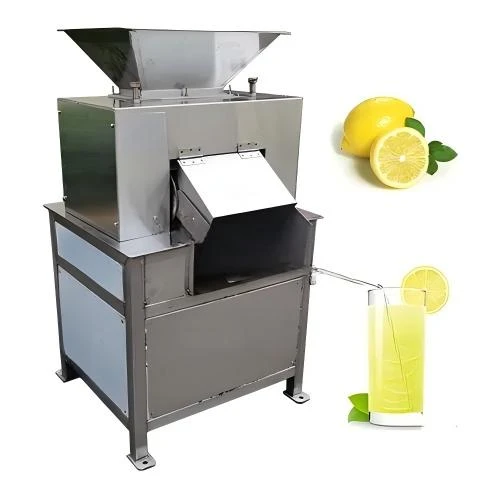


Industrial Lemon Squeezer for Continuous Citrus Juice Processing
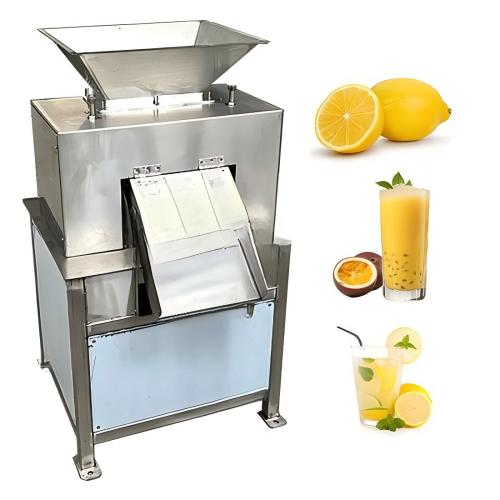
The Industrial Lemon Squeezer is designed for processors that need a practical route from whole citrus fruit to collected juice without a separate pre-peeling step. Fruit enters through the continuous feed hopper, moves into the automatic cutting and pressing section, and is squeezed while peel and pomace are directed away from the juice stream. This arrangement reduces repeated manual handling and supports a steady workflow for small and medium citrus-processing lines.
With a stated processing capacity of 1,000–1,500 kg/h, the machine can serve juice workshops, beverage plants, fruit-processing facilities, central kitchens, and ingredient producers. The suitable fruit diameter is approximately 50–100 mm, with a maximum reference feed size of up to 110 mm. Lemons and limes are the primary applications, while oranges, kumquats, grapefruits, and passion fruit can also be evaluated according to variety, maturity, peel condition, and the required juice quality.
AGICO configures the machine around the buyer's raw material, electrical standard, collection method, cleaning routine, and available floor space. Because fruit properties vary by season and origin, representative samples and expected operating conditions should be discussed before the final configuration is selected.
Key Processing Advantages
Whole-Fruit Feeding
Pre-peeling is not required. Operators can load prepared whole fruit into the hopper, reducing the number of upstream operations. Fruit should still be inspected and unsuitable material removed before feeding.
Continuous Operation
Automatic cutting and pressing support a continuous production rhythm. Stable feeding and fruit within the stated size range help limit interruptions and make downstream collection easier to organize.
Filtered Juice Collection
The collection hopper incorporates filtration to intercept larger solids before juice moves to a tank, pump, pasteurizer, or filling stage. Final filtration requirements depend on the desired pulp level.
Separate Residue Discharge
Peel and pomace leave through a dedicated discharge path rather than accumulating with the liquid stream. This supports orderly residue collection and helps operators keep the processing area manageable.
AGICO Technical Data
| Parameter | Specification |
|---|---|
| Processing Capacity | 1,000–1,500 kg/h |
| Motor Power | 2.2 kW |
| Suitable Fruit Diameter | Approximately 50–100 mm |
| Maximum Reference Feed Size | Up to 110 mm |
| Roller Pressing Clearance | Approximately 30 mm; adjustable |
| Voltage | 220V or 380V, depending on configuration |
| Machine Dimensions | Approximately 900 × 680 × 1560 mm |
| Alternative Configuration | Approximately 1250 × 800 × 1450 mm |
| Construction Material | Food-grade stainless steel; commonly SUS304 for product-contact parts |
| Feeding Method | Continuous hopper feeding |
| Juice Collection | Filtered juice collection hopper |
| Residue Discharge | Automatic peel and pomace discharge |
| Operating Mode | Continuous automatic cutting and pressing |
| Suitable Products | Lemons, limes, oranges, kumquats, grapefruits and passion fruit |
| Pre-peeling Requirement | Not required |
| Pre-grading Requirement | Generally not required within the specified fruit-size range |
The two dimension sets represent different configurations, so they should not be treated as interchangeable installation drawings. Confirm the selected arrangement, voltage, feed height, juice outlet, residue destination, service clearance, and connection points before finalizing the factory layout. Practical capacity also depends on fruit size, ripeness, feed consistency, and the required extraction result.
Suitable Fruits and Production Scenarios
Lemons and Limes
For concentrated juice, beverage bases, sauces, and ingredient preparation, the line can receive washed and inspected fruit directly. Small or irregular lots should be trialed to verify feeding behavior.
Oranges and Kumquats
Fruit within the stated diameter range can be processed without routine pre-grading. When a shipment contains unusually large or small fruit, simple size separation can improve feeding stability.
Grapefruit
Larger citrus requires careful confirmation against the 110 mm maximum reference feed size. Variety, peel thickness, and maturity influence both feeding and the balance between juice recovery and peel pressure.
Passion Fruit
Passion fruit has a different internal structure from citrus, so sample testing is valuable. AGICO can discuss the expected product, pulp handling, filtration level, and downstream collection before configuration.
In a typical production scenario, operators wash and inspect the fruit, remove leaves and damaged pieces, and maintain an even hopper feed. Collected juice may then pass to a balance tank, finer filtration, blending, pasteurization, or filling. The receiving equipment should be sized for the real flow and positioned so the juice does not back up at the machine outlet.
Working Principle, Cleaning, and Daily Care

Fruit is introduced through the hopper and guided toward the cutting and pressing mechanism. The press applies controlled compression through the adjustable roller arrangement. Expressed liquid passes toward the filtration and collection area, while peel and pomace are moved to the separate residue outlet. This continuous sequence allows incoming fruit, juice collection, and waste removal to be organized as one coordinated process.
At product changeover or the end of a shift, stop feeding and allow remaining fruit to clear. Isolate the electrical supply before opening guards or approaching moving components. Remove retained peel and pulp, clean food-contact areas with methods compatible with stainless steel, rinse away detergent residues, and allow surfaces to drain. Do not direct uncontrolled high-pressure water at motors, switches, bearings, or electrical enclosures unless the confirmed configuration is rated for that cleaning method.
Daily checks should cover the feed path, cutting and pressing area, filtration section, residue outlet, fasteners, guards, and abnormal noise or vibration. Wear parts and adjustment points should be inspected according to actual operating hours and fruit conditions. A documented cleaning and inspection routine helps maintain repeatable operation and makes developing issues easier to identify.
Frequently Asked Questions
Do lemons need to be peeled before processing?
No. The stated process accepts whole fruit and automatically handles cutting and pressing. Fruit should still be washed, inspected, and cleared of foreign material.
Is fruit grading required?
Pre-grading is generally not required when fruit stays within the specified size range. Mixed lots containing oversize fruit, severe shape variation, or damaged pieces should be sorted for more stable feeding.
What determines actual hourly output?
The stated capacity is 1,000–1,500 kg/h. Actual results depend on fruit diameter, maturity, peel condition, feeding consistency, setup, and the juice and residue characteristics required by the process.
Can the juice connect directly to downstream equipment?
Yes, provided the outlet height, flow, filtration requirement, piping, receiving tank, and downstream capacity are coordinated. A buffer tank is often useful where the next stage operates at a different rhythm.
What information is needed for configuration?
Please provide fruit types and size ranges, expected hourly volume, operating hours, voltage and frequency, target juice condition, cleaning method, available space, feed arrangement, downstream equipment, and the intended peel and pomace handling route. AGICO can then match the machine and interfaces to the project.
Hot Tags: industrial lemon squeezer, China industrial lemon squeezer manufacturers, suppliers, factory, Automatic Olive Pitting Machine, Carrot Cutting Machine, Fruit Vegetable Dehydration Equipment, Potato Drum Washing Machine, Root Vegetable Peeling Machine, Vacuum Vegetable Drying Line