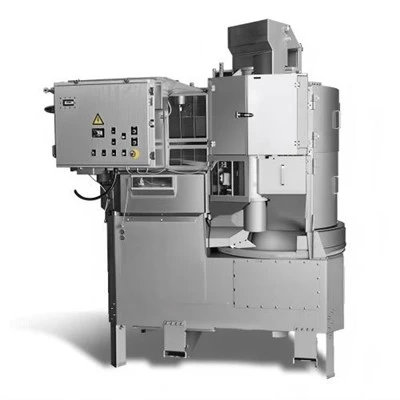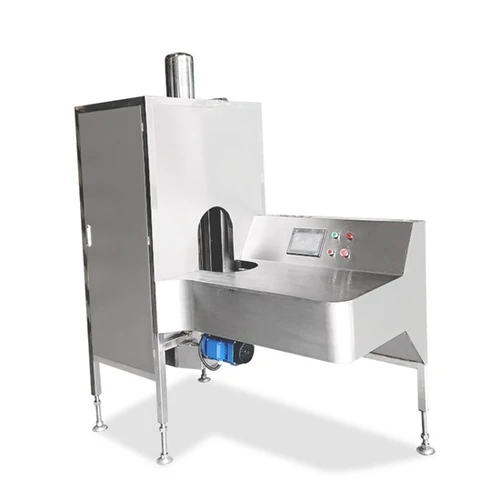

Industrial Orange Peeler Machine Overview
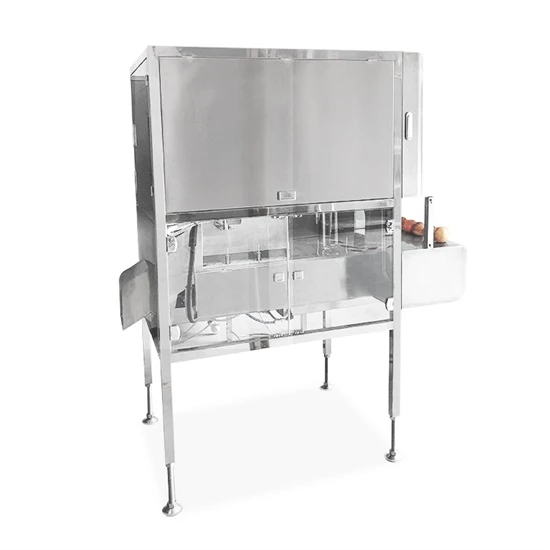
The industrial orange peeler machine is designed for processors that need a repeatable peeling cycle while keeping fruit loading under operator control. The 1200-class configuration accepts fruit approximately 40–100 mm in diameter and 40–120 mm in height, covering common oranges and similarly sized produce. An operator places each fruit in the loading position, and the machine performs the peeling movement automatically. This arrangement is useful where incoming fruit varies enough to benefit from visual inspection before loading, but the peeling action should remain consistent from piece to piece.
Adjustable peeling thickness from 0.5 to 3 mm helps buyers balance peel removal against edible-product retention. Actual settings should reflect variety, ripeness, surface condition, fruit shape, and the required downstream finish. The quoted capacity is up to 1,200 pieces per hour and peeling efficiency can reach up to 96%, depending on fruit condition. These are operating limits rather than guarantees for every batch. At AGICO, we recommend confirming representative fruit samples, target finish, and labor arrangement before final configuration.
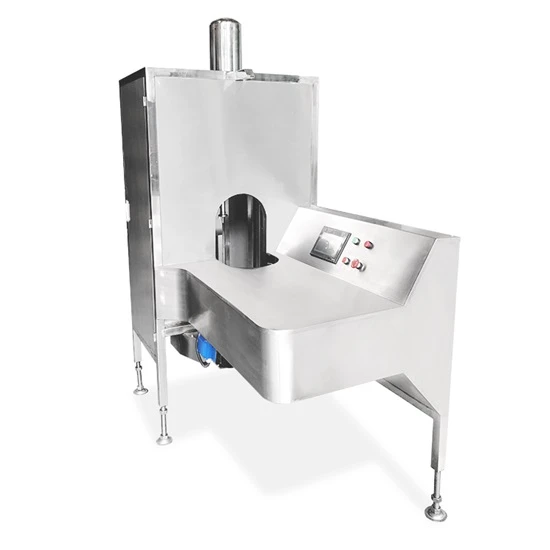
Key Features for Controlled Fruit Peeling
Each feature should be evaluated against the fruit, operating routine, and connected equipment rather than as a stand-alone claim.
Adjustable Peel Depth
A 0.5–3 mm adjustment range lets the operator respond to thick citrus peel, thin-skinned fruit, or a different finishing requirement. Correct adjustment can limit unnecessary flesh removal, but sample verification remains important when size or maturity changes.
PLC and Touchscreen Control
The PLC-based control system organizes the automatic peeling cycle and gives operators a clear interface for routine settings. It supports repeatable operation after the suitable parameters have been established for a particular fruit batch.
SUS304 Machine Construction
SUS304 stainless-steel construction supports routine wash-down and food-processing hygiene practices. Cleaning procedures should still follow the site sanitation plan, with electrical and moving parts protected as required by the final machine configuration.
Separate Product and Peel Discharge
Peeled fruit and removed peel leave by separate routes. This makes it easier to direct acceptable fruit toward inspection, cutting, juicing, or packing while collecting peel away from the product stream.
Technical Data of the Industrial Orange Peeler Machine
| Parameter | Specification |
| Model | AGICO-1200 / AGICO-1200 class |
| Processing Capacity | Up to 1,200 pcs/h |
| Suitable Fruit Diameter | 40–100 mm |
| Suitable Fruit Height | 40–120 mm |
| Peeling Thickness | 0.5–3 mm adjustable |
| Peeling Efficiency | Up to 96%, depending on fruit condition |
| Feeding Method | Manual fruit loading |
| Peeling Operation | Automatic |
| Control System | PLC with touchscreen |
| Installed Power | Approximately 0.5–1.5 kW |
| Voltage | 220V or 380V, 50Hz; customizable |
| Machine Material | SUS304 stainless steel |
| Reference Dimensions | 1500 × 850 × 1700 mm |
| Alternative Configuration | 1750 × 750 × 1900 mm |
| Reference Weight | Approximately 290–350 kg |
| Compressed Air | Required on some configurations |
| Suitable Products | Oranges, lemons, apples, pears, kiwifruit, guavas, small mangoes, persimmons, and similar fruits |
| Discharge Method | Peeled fruit and peel discharged separately |
| Automation Level | Semi-automatic feeding with an automatic peeling cycle |
These specifications are confirmed for the current machine model. Final dimensions, installed power, voltage, compressed-air requirements, and achievable output must be confirmed against the selected configuration before quotation and purchase. The two listed machine envelopes indicate that more than one configuration may be available; buyers should reserve space only after receiving the final drawing.
Model selection begins with real fruit dimensions, not the product name alone. A procurement team should provide the diameter and height range, photographs of typical and difficult fruit, peel thickness, daily throughput, and the desired surface finish. Utilities also matter: the site voltage and frequency must match the supplied electrical system, while some configurations require compressed air. AGICO will normally ask how peeled fruit should transfer to inspection, cutting, juicing, or packing so that discharge height, collection trays, and operator access can be reviewed together.
Fruit Applications and Line Integration
Suitability depends on size, shape, skin behavior, firmness, and the finish required after peeling.
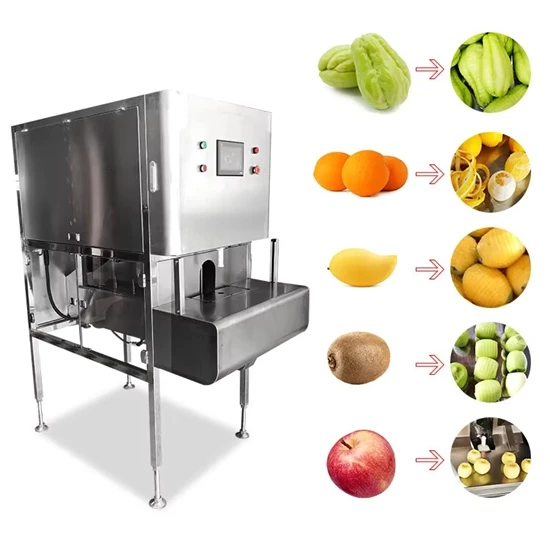
Citrus and Similar Fruit
Oranges and lemons are primary applications, while apples, pears, kiwifruit, guavas, small mangoes, persimmons, and similarly sized fruit may also be considered. Irregular contours, soft flesh, stem-end geometry, or large batch variation can change the result, so representative samples should be assessed before a production setting is fixed.
Downstream Product Handling
In a continuous preparation line, an operator can inspect and load fruit while peeled product is directed toward a checking table or the next cutting or juicing stage. Separate peel discharge helps keep by-product collection apart. The buyer should confirm collection height, container size, operator movement, and whether an intermediate conveyor is required.
Operating Workflow, Cleaning, and Maintenance
1
Inspect and Prepare Fruit
Remove unsuitable foreign material and separate fruit outside the confirmed diameter and height range. Grouping fruit with similar size and condition helps the operator maintain a stable setting and identify pieces that need a different approach.
2
Load and Run the Automatic Cycle
The operator loads fruit manually and starts the automatic peeling sequence through the control system. During initial production, inspect peeled fruit frequently and adjust the thickness setting when peel depth or surface condition changes.
3
Separate and Transfer Outputs
Route peeled fruit to the next inspection or processing point and collect peel separately. Check that containers or conveyors do not obstruct access, create product drops that cause damage, or force the operator into an awkward loading position.
4
Clean Between Batches
Before cleaning or blade inspection, isolate electrical and pneumatic energy according to the site procedure. Remove peel residues from product-contact and collection areas, clean the SUS304 surfaces with approved methods, and allow the equipment to dry before restart. During changeover, inspect guards, fasteners, the peeling mechanism, and discharge paths. The intended sanitation routine and access requirements can be reviewed during configuration discussions.
Orange Peeler Machine FAQ
-
Can one machine peel oranges and other fruit?
It can be considered for the listed fruit within the dimensional range, but peel behavior and shape vary. Send representative samples or detailed size and condition information so the required finish can be evaluated.
-
How is peeling thickness selected?
The available range is 0.5–3 mm. Begin with a conservative setting, inspect the surface and flesh loss, then refine the setting for the current variety and batch condition.
-
Does every configuration require compressed air?
No. Compressed air is required on some configurations. Confirm the selected machine version and the available plant utilities before the order is finalized.
-
What information should be provided for a quotation?
Provide fruit type, minimum and maximum dimensions, typical photos, required hourly output, target peel finish, site voltage and frequency, compressed-air availability, and the intended upstream and downstream equipment. This allows AGICO to confirm the appropriate configuration and interfaces.
Hot Tags: orange peeler machine, China orange peeler machine manufacturers, suppliers, factory, Citrus Pulp Separation Machine, Fruit Puree Pulping Machine, Mashed Potato Processing Line, Onion Top and Root Cutting Machine, Pear Cutting Machine, Vision Fruit Sorting Machine