Industrial Watermelon Cutting Machine for Uniform Wedges
The Watermelon Cutting Machine is a semi-automatic wedging system for large round fruit and firm produce. One operator manually places a prepared watermelon in the loading position, leaves the protected cutting area, and activates the synchronized two-button control. The machine then performs an automatic downward cutting cycle and directs the separated wedges toward two product discharge conveyors.
Interchangeable cutting arrangements produce 3, 4, 5, 6, 7, or 8 wedges. This allows processors to match the portion format to retail packs, fresh-cut trays, catering service, or the next trimming operation. Fruit can be peeled or unpeeled, provided its diameter and height do not exceed 340 mm and its shape can be positioned safely and steadily.
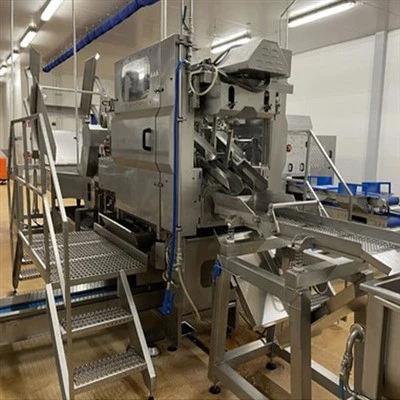
At approximately 10 cycles per minute, the machine is intended for organized batch or line production rather than hand cutting. AGICO reviews fruit dimensions, wedge count, upstream preparation, discharge handling, and destination voltage before confirming the final configuration. The standard specification on this page refers to the guarded dual-conveyor arrangement shown in the operating image.

Key Cutting and Safety Features
Selectable Wedge Count
Cutting sets for 3 through 8 wedges allow the same machine platform to support different portion plans. Blade selection must match the desired pack format and the actual fruit condition.
Large-Fruit Envelope
The 340 mm maximum diameter and height accommodate whole watermelon and similarly sized produce. Oversize or unstable fruit should be separated before loading rather than forced into position.
Controlled Cycle Start
Synchronized two-button control requires the operator to initiate the cycle from the designated position, while physical barriers restrict access around the downward cutting area.
Simple Utility Interface
The cutting operation uses a 1 kW electrical drive and does not require compressed air or process water. Cleaning utilities and drainage must still be planned for the surrounding work area.
AGICO Technical Data
| Parameter | Specification |
|---|---|
| Machine Type | Semi-automatic watermelon wedging machine |
| Processing Capacity | Approximately 10 cycles/min |
| Cutting Output | 3, 4, 5, 6, 7 or 8 wedges |
| Maximum Fruit Diameter | 340 mm |
| Maximum Fruit Height | 340 mm |
| Installed Power | 1 kW |
| Voltage | 220V / 380V / 480V, three-phase |
| Machine Dimensions | 1450 × 1200 × 2200 mm |
| Machine Weight | Approximately 465 kg |
| Number of Operators | 1 |
| Feeding Method | Manual loading |
| Cutting Operation | Automatic downward cutting cycle |
| Discharge Method | Dual product discharge conveyors |
| Conveyor Dimensions | 1200 × 400 mm each |
| Construction Material | AISI 304 stainless steel |
| Suitable Products | Watermelon, melon, pumpkin and butternut squash |
| Product Condition | Peeled or unpeeled |
| Compressed Air | Not required |
| Process Water | Not required during cutting |
| Safety Start | Synchronized two-button control |
| Safety Protection | Physical safety barriers around the cutting area |
Capacity should be interpreted as cycles rather than kilograms because fruit weight varies widely. Actual hourly throughput depends on the loading rhythm, fruit preparation, blade arrangement, discharge clearance, and the time required to remove nonconforming produce. Voltage must be confirmed for the installation site before the electrical configuration is ordered.
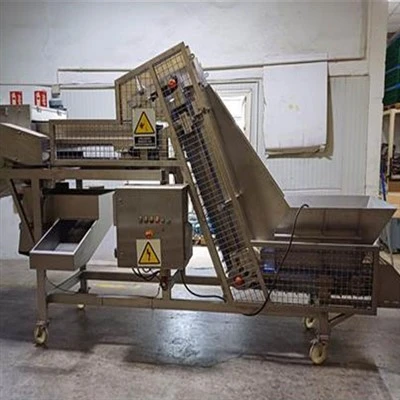
The product gallery also includes a user-approved enclosed AGICO configuration with a different enclosure and apparent side-chute arrangement. The table above describes the standard dual-conveyor model. Buyers should confirm which enclosure, discharge layout, overall dimensions, and safety arrangement appear in the final quotation instead of combining features from both versions.
Wedge Quality and Suitable Products

Watermelon and Melon
For retail trays or food-service portions, wedge count should be selected from the required finished size backward. Fruit diameter, rind thickness, maturity, and seed structure affect the appearance and stability of the cut. Similar-sized fruit within a batch supports more consistent portions.
Pumpkin and Butternut Squash
Firm squash can also be evaluated, but shape, skin hardness, stem removal, internal cavity, and required orientation matter. Representative product testing is advisable before specifying blades or claiming the same cycle rate as watermelon.
The two conveyors can send separated wedges toward collection trays, inspection positions, trimming tables, or packing staff. Downstream capacity should be sufficient to prevent wedges from accumulating at the discharge. AGICO will normally ask how the customer plans to orient, inspect, and pack the product before confirming conveyor handoff.
Operating, Discharge, and Cleaning Workflow
1. Inspect and Prepare
Remove unsuitable fruit and confirm size, stability, and required peeled or unpeeled condition. Trim stems or surfaces when the selected product requires it.
2. Load Manually
Place one fruit in the defined cutting position. Keep hands outside the protected zone and verify that the product sits securely before starting the cycle.
3. Start and Cut
Use the synchronized two-button control from the operating position. The cutting head travels downward automatically and divides the product with the installed wedge set.
4. Discharge and Clean
Allow wedges to clear on both conveyors. After production, isolate electrical power, secure the cutting head, remove residues, clean appropriate surfaces, rinse, dry, and inspect.
No process water is required during the cutting stroke, but sanitation still requires an approved cleaning plan. Operators should never reach through barriers, defeat the two-button start, or approach blades before isolation. Changeover checks should include the blade set, fasteners, guarding, conveyor surfaces, discharge clearance, abnormal noise, and any damage caused by hard or poorly positioned produce.
Frequently Asked Questions
Can the machine cut peeled and unpeeled watermelon?
Yes. Both conditions are listed as suitable. The buyer should still define the required wedge appearance and confirm that preparation, rind condition, and fruit stability match the selected blade arrangement.
How should the number of wedges be selected?
Choose from the target portion size, pack dimensions, customer specification, and fruit diameter. A fixed wedge count will produce different portion weights when incoming fruit size varies.
Does the machine require compressed air or cutting water?
No compressed air or process water is required during cutting. The site still needs the specified three-phase electrical supply and suitable cleaning, drainage, and sanitation arrangements.
What does approximately 10 cycles per minute mean?
It describes the cutting-cycle reference, not a fixed kilogram output. Loading, positioning, discharge, inspection, product variation, and operator practices determine actual production.
What information is needed for configuration?
Please provide fruit types, diameter and height ranges, peeled or unpeeled condition, wedge count, hourly demand, voltage, upstream preparation, downstream collection or packing method, cleaning practice, and available floor space. AGICO can then confirm the appropriate standard or alternate configuration.
Hot Tags: watermelon cutting machine, China watermelon cutting machine manufacturers, suppliers, factory, Grape Sorting Machine, Pear Chopping Machine, Pineapple Chopping Machine, Pomegranate Aril Processing Equipment, Pomegranate Juice Concentrate Production Line, Screw Conveyor