

Product Description
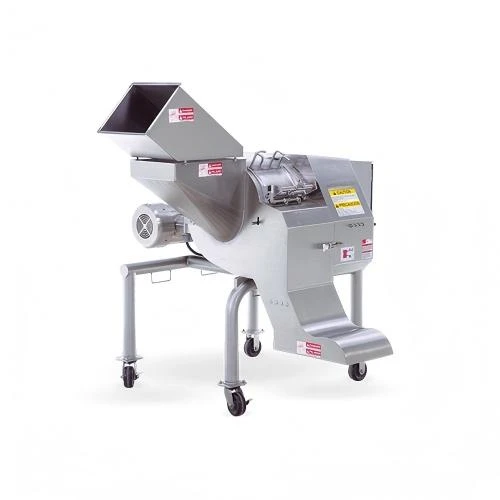
The AGICO Tomato Dicer Machine is a continuous industrial cutter developed for dicing, strip cutting, and slicing tomatoes. Product enters by gravity, meets the rotating impeller, and is presented to the cutting elements in a controlled centrifugal path. This arrangement can support steady production when tomatoes arrive at a consistent size, temperature, ripeness, and firmness.
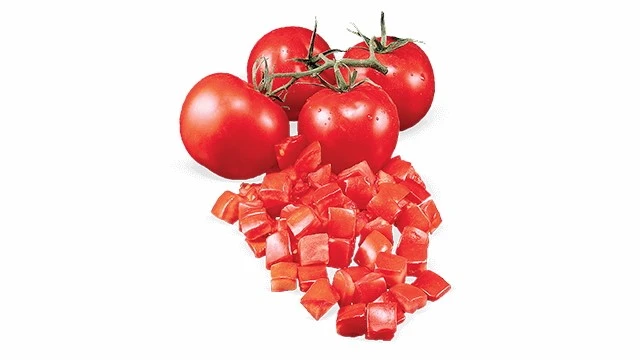
Tomato behavior matters as much as nominal machine capacity. Firm processing tomatoes generally hold a defined cube better than overripe fruit, while soft fruit may release more juice and create irregular edges. Before a final configuration is selected, AGICO recommends defining the incoming tomato range, target cut, acceptable fines, maximum damaged pieces, collection method, and the next operation in the line. A controlled sample test gives the buyer a useful basis for acceptance.
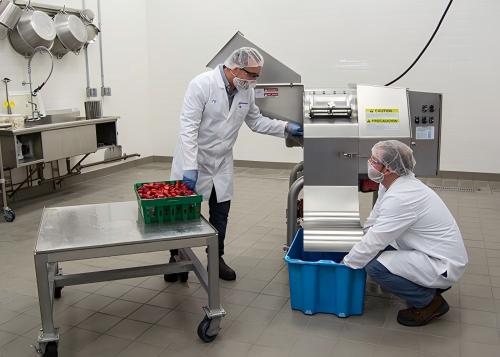
The floor-standing mobile format allows the machine to be positioned near washing, inspection, conveying, cooking, or packing equipment. Installation planning should leave access to the hopper, cutting chamber, discharge area, electrical enclosure, and service doors rather than treating the published machine envelope as the complete space requirement.
Key Features for Tomato Processing
-
Three Cutting Functions
Dicing, strip cutting, and slicing allow the same machine platform to serve different recipes. The installed cutting components determine the finished format, so the required cut must be stated before manufacture.
-
Centrifugal Impeller Presentation
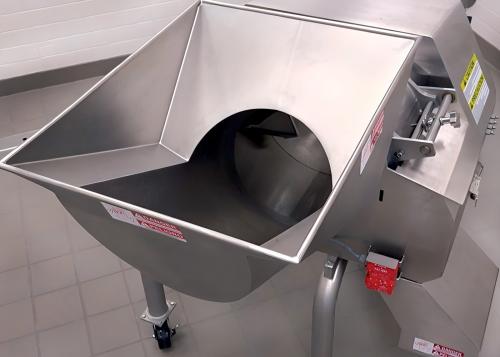
The impeller moves product toward the cutting zone and supports repeated presentation. Stable feeding is important: surges, mixed sizes, or very soft tomatoes can change the load and the visible result.
-
Large Infeed Allowance
The published general infeed limit is 254 mm in any dimension. Actual tomato preparation still depends on variety and condition; remove unsuitable stems, foreign material, and badly damaged fruit before feeding.
-
Mobile Floor Configuration
A mobile base assists positioning and sanitation access. During operation the machine must be secured on a level floor, with guarded movement zones and sufficient clearance for safe maintenance.
Technical Data of Tomato Dicer Machine
| Parameter | Specification |
|---|---|
| Model | DiversaCut 2110A |
| Tomato Processing Function | Dicing, strip cutting and slicing |
| Example Tomato Dice Size | 15.9 mm / 5/8 in |
| Published Tomato Dice Range | Approximately 3.2–25.4 mm / 1/8–1 in |
| Maximum General Infeed Size | 254 mm / 10 in in any dimension |
| Indicative Tomato Capacity | Approximately 22,000 kg/h at a 19.1 mm dice |
| Main Motor | 5 or 10 HP |
| Main Motor Power | 3.7 or 7.5 kW |
| Machine Dimensions | 1,750 × 1,672 × 1,753 mm (L × W × H) |
| Net Weight | Approximately 749 kg |
| Feeding / Cutting | Continuous gravity feeding / centrifugal impeller |
| Installation | Floor-standing mobile configuration |
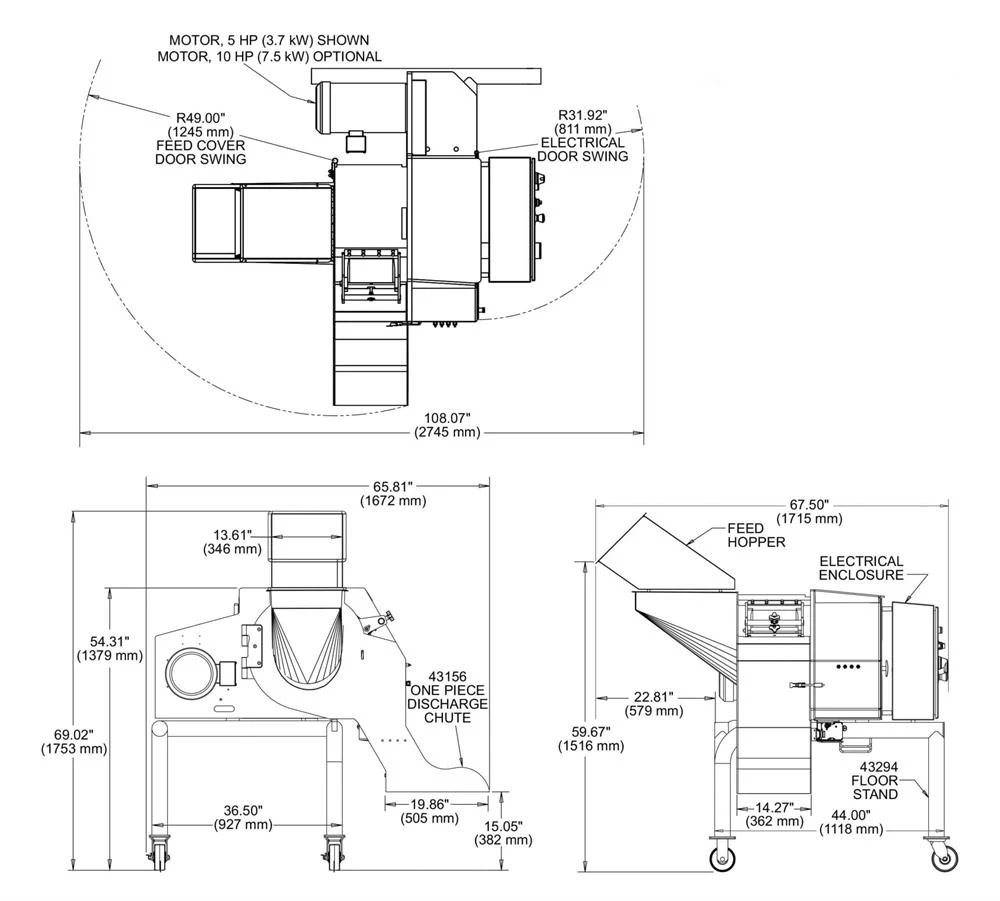
Capacity should be interpreted together with the stated 19.1 mm dice condition. A smaller cut, softer tomatoes, irregular feeding, or strict finished-product tolerance can change practical throughput. The 5 HP and 10 HP options must be matched to the cutting assembly, duty, electrical supply, and expected load rather than selected from motor power alone.
The supplied dimensions drawing includes service-door swing and operating clearances beyond the basic machine body. AGICO will normally ask for the upstream conveyor height, available floor area, discharge height, collection container, wash-down practice, power standard, and required access route before confirming the final installation arrangement.
Production Scenarios and Line Integration
A tomato dicer works as one stage in a preparation line. The surrounding handling equipment must protect feed consistency and move cut product away without crushing or excessive accumulation.
Prepared Tomato Feeding
Control the product entering the hopper.
After washing and inspection, tomatoes should enter at a rate the machine can accept continuously. Remove foreign material and fruit that falls outside the agreed condition. A surge hopper or regulated conveyor can prevent sudden loading that affects the cutting chamber.
Operators should monitor variety, temperature, ripeness, and incoming size. When a new batch differs materially, check several finished samples before returning to normal feed speed.
Discharge, Collection, and Cleaning Access
Keep cut tomato moving and preserve service clearance.
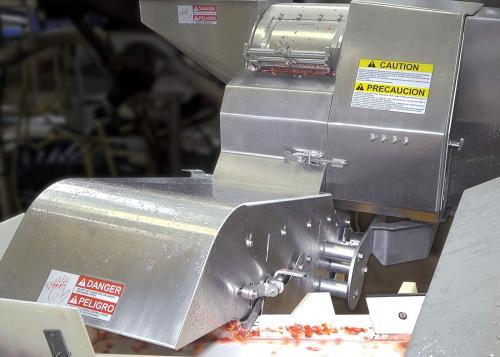
The receiver, conveyor, pump, or cooker after the dicer must keep pace with actual discharge. Excessive drop height or a full container can damage cubes and increase juice loss. The discharge interface should therefore be agreed together with the target piece specification.
For changeover or sanitation, stop and isolate the machine before opening guarded areas. Provide room to remove cutting parts, clear retained tomato, inspect wear surfaces, and wash food-contact zones. AGICO can review the planned cleaning window and access direction during layout confirmation.
How the Tomato Dicing Process Works
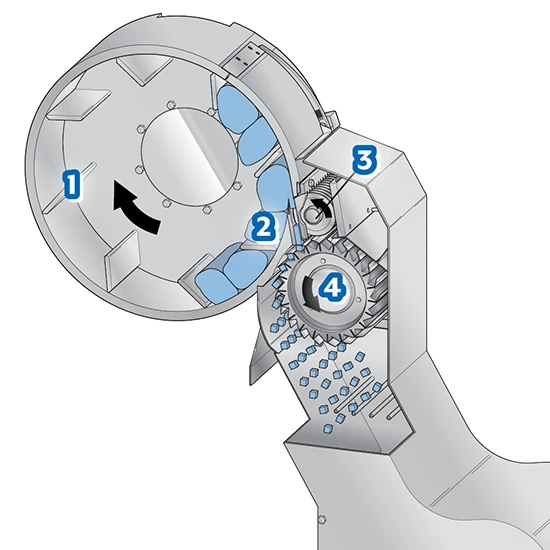
1. Controlled feed: Prepared tomatoes enter through the hopper by gravity. Consistent loading helps avoid crowding and supports repeatable contact with the impeller.
2. Impeller presentation: The rotating impeller carries product toward the slicing edge. Tomato firmness and incoming size influence how cleanly the fruit is presented.
3. Size formation: The selected knives and crosscut components form slices, strips, or cubes. The example 15.9 mm result is one configuration within the published tomato range.
4. Continuous discharge: Finished pieces leave the cutting area for collection or the next process. The downstream system must prevent backup and limit damaging drop height.
Frequently Asked Questions
-
Can the machine dice soft or very ripe tomatoes?
It can process tomatoes, but softness affects edge definition, juice release, and fines. Send representative fruit information and define acceptance criteria; a sample trial is recommended for delicate raw material.
-
How should we choose the tomato dice size?
Start from the recipe and downstream process, then specify target size and tolerance. The published range is approximately 3.2–25.4 mm, while 15.9 mm is an example rather than the only available result.
-
Is 22,000 kg/h guaranteed for every cut?
No. It is an indicative value tied to a 19.1 mm dice and suitable product conditions. Practical capacity depends on tomato properties, feed continuity, cutting setup, motor option, and quality limits.
-
What information does AGICO need before quotation?
Please provide tomato variety and condition, incoming dimensions, required output, cut format, hourly and daily volume, electrical standard, available layout, upstream feed, downstream collection, cleaning method, and sample acceptance criteria. For a line project, also identify the proposed conveyor height, collection container, operating schedule, sanitation window, and the person responsible for approving finished samples. This information helps our team compare the machine setting with the actual production interface.
Hot Tags: tomato dicer machine, China tomato dicer machine manufacturers, suppliers, factory