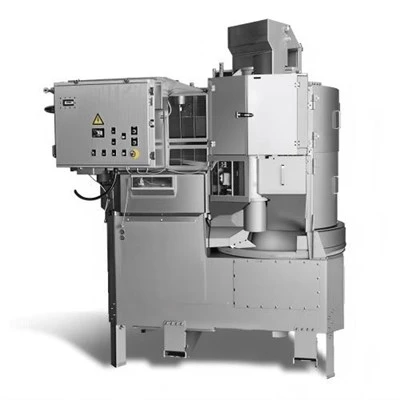
Industrial Citrus Peeler Machine Overview

The AGICO citrus peeler machine is a semi-automatic system for removing the outer skin of oranges, lemons, grapefruits, and selected similarly shaped fruit. One operator places fruit into interchangeable cups, while two independent heads support continuous loading and processing. Automatic self-centering aligns each piece before a contour-following mechanism travels around its shape. Peeling depth and fruit rotation speed can be adjusted during operation to respond to different varieties, maturity levels, and finished-product requirements.
Rated capacity is up to 30 citrus fruits per minute, equivalent to up to 1,800 fruits per hour. These figures are maximum references rather than guaranteed output for every fruit. Actual performance depends on diameter consistency, shape, peel thickness, operator rhythm, cup and tool selection, and the amount of inspection required. Automatic top-and-tail removal and conveyor discharge reduce manual transfer, while an optional coring function can be discussed for citrus projects that need it. Stainless-steel construction supports routine sanitation in food-processing environments, subject to the cleaning method and chemicals approved for the installation. Before final selection, buyers should also define acceptable peel residue, maximum flesh loss, average fruit weight, operating shift pattern, and the receiving process after discharge.
Peeling Control for Variable Citrus Fruit

-
Automatic Self-Centering
The centering system positions fruit before cutting begins, reducing the effect of small placement differences and helping the peeling path follow the product more consistently.
-
Shape-Following Contour Peeling
The mechanical head tracks the individual fruit profile instead of assuming a perfectly round shape. Fruit grading is still important because extreme irregularity changes contact and yield.
-
Depth and Speed Adjustment
Operators can adjust peeling depth and rotation speed during operation. Trial settings should balance clean peel removal with unnecessary flesh loss.
-
Integrated End Cutting
Automatic top-and-tail removal prepares both ends as part of the cycle. The required finish should be confirmed with representative fruit samples.
Final configuration should be based on fruit samples, the required surface finish, utilities, and downstream handling. The sample set should represent the smallest, largest, softest, and most irregular fruit expected in normal production, not only the easiest pieces. Values qualified by "up to," "optional," "indicative," or "configuration-dependent" must remain qualified during comparison. Project discussions should cover expected daily volume, available labor, sanitation schedules, spare cup and tool requirements, and whether downstream equipment can receive fruit at the selected operating rate without creating unnecessary accumulation.
| Parameter | Specification |
| Processing Capacity | Up to 30 citrus fruits/min |
| Equivalent Output | Up to 1,800 fruits/h |
| Peeling Heads | 2 independent processing heads |
| Recommended Operators | 1 operator |
| Feeding Method | Manual placement into interchangeable fruit cups |
| Product Centering | Automatic self-centering system |
| Peeling Method | Shape-following mechanical contour peeling |
| Peeling Depth / Fruit Rotation Speed | Adjustable during operation |
| End Cutting | Automatic top-and-tail removal |
| Coring Function | Optional for citrus fruit |
| Product Discharge | Automatic conveyor discharge |
| Indicative Yield | 50% or higher for fully peeled fruit |
| Machine Construction | Stainless steel |
| Electrical Supply | Configuration-dependent; industrial three-phase supply available |
| Operation Mode | Semi-automatic continuous operation |
| Applicable Products | Oranges, lemons, grapefruits, kiwifruit, mangoes and baby pineapples |
Send the fruit diameter range, shape variation, peel thickness, and target finish for evaluation.
Confirm cup sizes, peeling tools, coring requirement, electrical supply, and receiving height before ordering.
Use representative samples to establish settings and review the indicative yield.
Plan safe loading access, conveyor direction, drainage, and cleaning clearance around the machine.

Peeling Head Selection
Match the tool and cup arrangement to the fruit range and required peel depth.
Products and Production Uses
The same machine concept can serve different fruit only after the cup, tool, settings, and expected finish have been matched to representative samples. Diameter alone is not enough: taper, surface irregularity, softness, peel adhesion, and the intended downstream use also affect the result. A short production trial can reveal whether one configuration covers the complete range or whether separate cups and settings are preferable.
Processed fruit leaves the peeling area through automatic transfer and conveyor discharge, ready for the buyer-defined receiving or inspection stage.
Suitable cup and peeling settings support fruit prepared for segments, further cutting, or ingredient processing.
Larger diameters require confirmation of the cup, tool path, peel depth, and receiving arrangement.
Kiwifruit, mangoes, and baby pineapples may be evaluated, but suitability is sample-dependent rather than universal.
From Loading to Cleaning
01
Grade and Prepare
Remove unsuitable fruit and group the production lot by practical diameter and shape ranges. Select the correct cups and confirm the discharge route.
02
Load the Fruit
The operator places one fruit into an interchangeable cup. Consistent placement and a steady rhythm help both independent heads work effectively.
03
Center and Rotate
Automatic self-centering aligns the fruit, then controlled rotation presents its surface to the contour-following mechanism.
04
Peel and Trim Ends
The head follows the profile at the selected depth and speed. Top-and-tail removal completes the specified end treatment; optional coring is configuration-dependent.
05
Discharge and Inspect
The conveyor transfers processed fruit to the receiving point. Inspect peel coverage, flesh loss, end cuts, and any retained defects before adjusting settings.
06
Clean and Check
After safe isolation, remove peel residue and clean accessible food-contact areas. Inspect cups, tools, guards, conveyor, and adjustment points before restart. Record unusual wear, damaged edges, loosened fittings, or changes in fruit handling so maintenance can be planned before product quality is affected.
Citrus Peeler Machine FAQ
-
How should fruit cups and settings be selected?
Provide representative fruit samples or accurate diameter, shape, and peel information. Cup size, peeling tool, depth, and rotation speed should be matched to the product and required finish, then verified with initial trials.
-
What does the indicative yield mean?
The stated 50% or higher yield applies as an indicative reference for fully peeled fruit. Actual yield changes with peel thickness, trimming, fruit shape, defects, maturity, settings, and acceptance criteria. It should be evaluated with the buyer's fruit rather than treated as a fixed guarantee.
-
Is coring included, and what must be confirmed before installation?
Coring is optional for citrus fruit and must be specified during configuration. Buyers should also confirm the electrical supply, conveyor direction and height, loading access, cleaning space, and safe isolation points. For daily cleaning, follow the supplied manual and site hygiene procedure after the machine has been safely isolated.
Hot Tags: citrus peeler machine, China citrus peeler machine manufacturers, suppliers, factory, Automatic Fruit Vegetable Drying Machine, Carrot Peeling Machine, Citrus Cutting Machine, Lemon Juice Processing Line, Multi Purpose Fruit and Vegetable Deseeding Machine, Z Type Conveyor