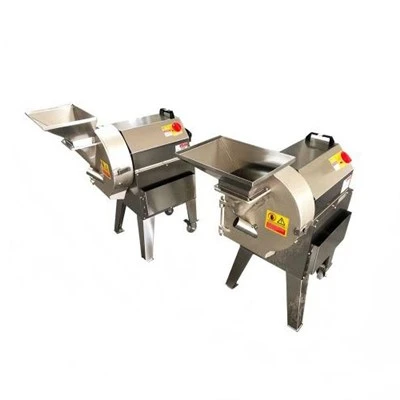
Industrial Onion Chopper
An industrial onion chopper prepares onions for commercial kitchens and food-processing lines that need controlled strips, slices, or diced pieces. The machine combines a feed opening, an installed cutting set, and a direct discharge route in a compact floor-standing structure. Its practical value is not simply faster cutting: it helps a production team define a repeatable product format before mixing, cooking, freezing, filling, or packing.
Onions vary in diameter, firmness, moisture, and layer structure, so the required result should be agreed before the cutter is selected. At AGICO, we normally ask for the prepared onion size, target geometry, acceptable fines, hourly input, and the next processing step. A 2 mm slice, a narrow shred, and a 20 mm dice place different demands on the blade set, feed preparation, collection container, and inspection routine.
AGICO Technical Data
| Parameter | Configuration |
|---|---|
| Capacity | 500–800 kg/h |
| Power | 1.5 kW |
| Voltage | 220 V / 380 V |
| Shredding Size | 2–10 mm |
| Slicing Size | 2–10 mm |
| Dicing Size | 6–20 mm |
| Approx. Packed Dimensions | 850 × 750 × 1,200 mm |
| Weight | Approximately 110 kg |
| Material | Stainless steel |
Capacity depends on onion preparation, feeding continuity, the installed cutting set, and the acceptance standard for fines or broken layers. Confirm the required voltage, cut result, and final configuration before ordering.
Features That Matter in Onion Preparation
Three Cutting Formats
The specified shredding and slicing range is 2–10 mm, while dicing covers 6–20 mm. The installed cutting components determine the finished geometry. Buyers should define one primary output and any required changeover formats so the correct sets can be discussed together.
Controlled Onion Feeding
Trimmed and inspected onions should enter at a steady rate rather than in dense surges. Consistent feeding gives the cutting area time to handle each batch and reduces sudden accumulation at the discharge. Very wet or softened onions may require slower loading and closer output checks.
Stainless-Steel Structure
The supplied configuration identifies a stainless-steel machine body. This supports routine cleaning in food-preparation areas, but sanitation still depends on access, detergent choice, rinsing, drying, and the plant's own hygiene procedure. Material grade and surface-finish requirements should be confirmed for the order.
Direct Collection Route
Cut onion leaves the machine into a receiver or onward transfer point. Container height and volume should match the discharge so pieces do not pile up against the outlet. For continuous work, plan how full containers will be exchanged without interrupting the feed rhythm.
Choose the Configuration from the Required Result
A useful quotation starts with the onion and finished product, not only the nominal hourly capacity.
Define the Geometry
State whether the line needs shreds, flat slices, or cubes. Include the target dimension, tolerance, and whether separated layers, small fragments, or fines are acceptable in the final product.
Describe the Onion Condition
Provide typical onion diameter, firmness, variety, storage condition, and preparation method. Peeled whole onions, halves, or pre-cut pieces behave differently at the feed opening and under the blade.
Match Size to the Recipe
A narrow shred for garnish, a controlled slice for cooking, and a larger dice for fillings require different checks. AGICO recommends confirming the result with representative onions before fixing the production setup.
Plan the Downstream Interface
Tell us whether product moves to a mixer, kettle, freezer, inspection belt, or packing station. Receiver dimensions, transfer height, batch size, and cleaning access can be as important as the cutter itself.
Output and Adjustment References
Use these images to discuss the required onion result. Final appearance still depends on raw-material condition, feed preparation, and the installed cutter.

Chopped Red Onion
Color contrast makes irregular fragments and separated layers easy to see during sample evaluation. Define the acceptable amount of fines before production.

Chopped White Onion
For fillings, sauces, or ready-meal preparation, check average piece size as well as the largest and smallest visible pieces in a representative sample.

Cutting-Size Check
Measure samples after the line reaches a steady feed condition. The nominal setting should be compared with the actual product rather than judged from the cutter alone.
Working Process, Cleaning, and Changeover
Inspect and Prepare
Remove unsuitable onions, loose foreign material, roots, and dry outer skin according to the plant procedure. Standardize the feed form-whole peeled onions, halves, or pre-cut pieces-before recording a production setting.
Feed at a Stable Rate
Introduce onions evenly and keep hands and tools away from the cutting zone. Watch motor sound, feed behavior, and outlet flow; stop and investigate instead of forcing material through an abnormal restriction.
Cut with the Installed Set
The selected components create the intended shred, slice, or dice. Take samples after flow stabilizes, then compare size distribution, broken layers, and fines with the recipe requirement.
Collect and Transfer
Move cut onion away from the discharge before it accumulates. In continuous preparation, coordinate receiver changes or the next conveyor with the operator so the feed does not need frequent unplanned stops.
Isolate, Clean, and Recheck
Disconnect and lock out power before opening accessible areas or changing cutters. Remove onion residue, clean approved food-contact surfaces, rinse where permitted, dry thoroughly, and inspect the cutting set before reassembly. Record the new setup after a changeover.
Frequently Asked Questions
-
Can one machine produce shreds, slices, and dice?
The supplied configuration lists all three functions, but each result depends on the installed cutting set. Confirm the required sets and changeover procedure with AGICO before ordering.
-
Why can soft or wet onions change the result?
Soft layers can deform before cutting, while excess surface water can increase sticking and make inspection harder. Consistent raw-material preparation supports a more repeatable sample.
-
Is 500–800 kg/h guaranteed for every cut?
No. It is the supplied capacity range, but practical throughput depends on onion size and condition, feed continuity, cutting format, outlet handling, and the accepted level of fines.
-
What should be checked during a cutter change?
Isolate power, follow the machine procedure, inspect the cutter and mounting points, remove residue, and confirm correct reassembly. Run a small sample before returning to full production.
-
What information should accompany an inquiry?
Send onion photos and dimensions, preparation method, target cut and tolerance, hourly input, voltage, operating hours, downstream equipment, and available space. Our team can then evaluate a configuration against the actual production route.
Hot Tags: industrial onion chopper, China industrial onion chopper manufacturers, suppliers, factory