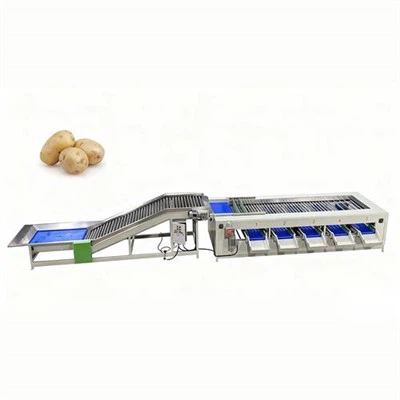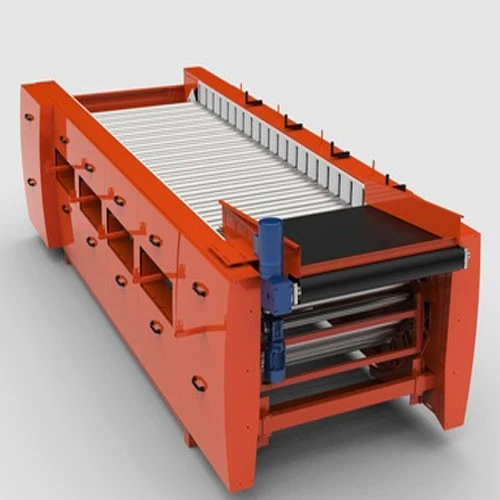

Potato Grading Machine for Controlled Size Separation
An industrial Potato Grading Machine separates potatoes into defined size fractions before packing, storage, peeling, frying, or further processing. The machine uses a continuous roller deck whose effective openings change along the product path. Potatoes pass through the first opening they can enter, while larger tubers continue toward the next section or the oversize discharge. This method grades by minimum effective diameter rather than by weight, so elongated or irregular potatoes may orient differently as they travel.
The reference range includes 3+1 and 4+1 configurations, corresponding to three or four graded fractions plus oversize product. AGICO treats those labels as a starting point, not a complete specification. Variety, average diameter, length, soil condition, surface moisture, allowable impact, target grade boundaries, hourly flow, and the containers below each outlet all affect the final design. Representative samples or a measured size distribution allow a more useful configuration discussion than a single requested capacity number.
Key Features for Repeatable Grading
-
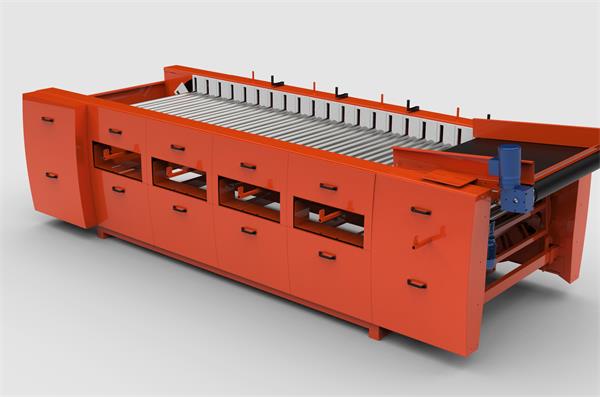
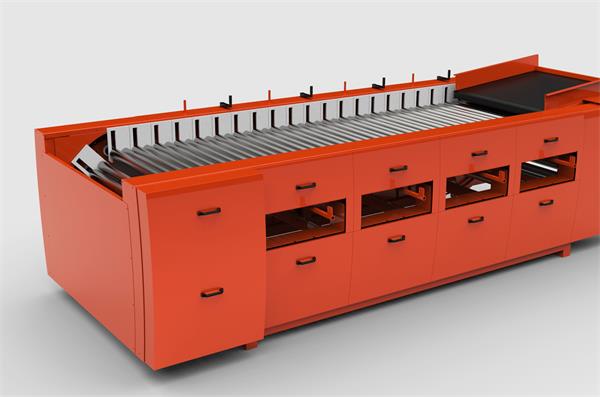
Adjustable Roller Gaps
Dual-height gap adjustment lets operators set the effective grading openings for each fraction. Hand cranks provide a direct mechanical setting that can be recorded for recurring potato lots.
-
Controlled Product Movement
An integrated flat-belt conveyor feeds the roller deck, while inverter adjustment changes roller speed. The practical setting balances separation accuracy, gentle handling, and required flow.
-
Multiple Fraction Discharge
Each grade leaves through its own outlet, and a standard chute handles oversize product. Bins or conveyors should be positioned to avoid mixing, excessive drop, and downstream bottlenecks.
-
Food-Processing Construction
Stainless rollers and specified food-contact parts support produce handling. Frame finish, contact-grade materials, guards, access panels, and sanitation details must be confirmed for the destination plant.
Reference Technical Data and Grade Planning
The values below reproduce the supplied reference data. Final grade count, working width, gap range, material configuration, drive arrangement, and achievable output require confirmation in the technical quotation.
| Parameter | Specification |
|---|---|
| Machine Type | Continuous roller-type diameter grader |
| Primary Application | Potato size grading |
| Other Products | Onions, carrots, beets, parsnips, and comparable root vegetables |
| Grading Principle | Adjustable dual-height roller-gap grading |
| Number of Grades | 4 or 5 product fractions, depending on model |
| Standard Configurations | 3+1 or 4+1 grades |
| Working Widths | 800 mm, 1,200 mm, and a larger-width configuration |
| Feeding Method | Integrated flat-belt conveyor |
| Rollers and Speed | Stainless-steel rollers; continuously adjustable by inverter |
| Size Adjustment | Manual adjustment using hand cranks |
| Frame and Contact Parts | Powder-coated steel frame; acid-resistant stainless steel or certified food-grade synthetic contact parts |
| Operation and Output | Continuous automatic grading into multiple size fractions |
Grade boundaries should be written as measurable acceptance bands. For example, a buyer may define the minimum effective diameter for each pack rather than using descriptions such as small, medium, and large. The specification should also explain how borderline tubers, long potatoes, doubles, damaged product, and undersize material are counted. During commissioning, samples from every outlet can be passed through a sizing gauge or measured with calipers. The results show whether the gap setting is correct and whether product loading allows enough movement for reliable presentation to the rollers.
Roller speed is another process variable rather than a simple maximum setting. Increasing speed may improve movement, yet an aggressive setting can reduce residence time or increase impact at transfers. A lower setting may support accuracy for irregular crops but limit throughput. The useful operating point should therefore be established with the actual variety, moisture condition, target fractions, and receiving equipment. AGICO can use this trial information to document a practical starting recipe for operators.
Applications and Line Integration
Potato graders are commonly positioned after soil removal, washing, drying, or inspection and before packing or size-sensitive processing. The same principle may suit selected onions and root vegetables after a product trial.
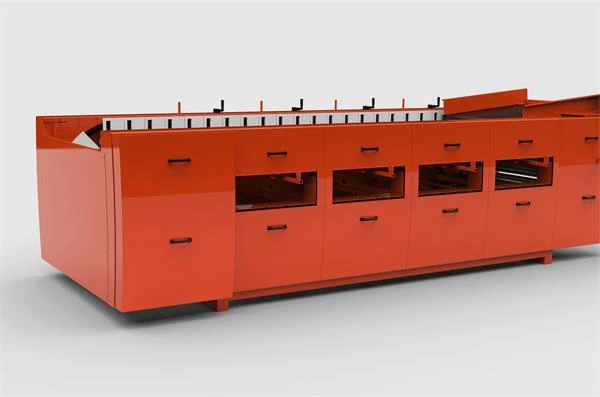
Leave room for guards, adjustment points, drive inspection, belt tracking, roller cleaning, and collection equipment. Confirm the plant procedure for isolation before service.
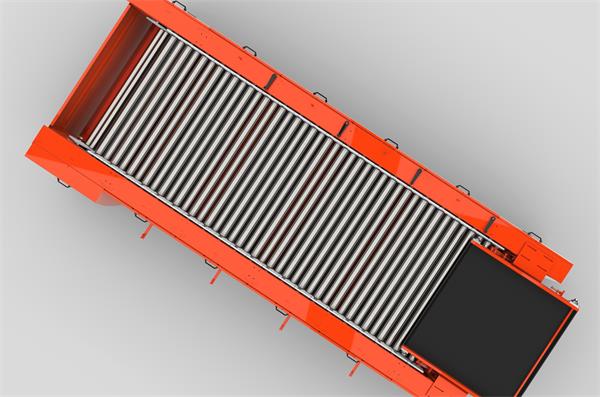
Each fraction needs a dedicated bin, conveyor, or packing route. The receiver must keep pace without bruising potatoes or allowing separated grades to mix again.
Cleaning, Inspection, and Routine Control
Before cleaning or adjustment, stop the machine, isolate its energy sources under the site procedure, and confirm that rollers, belts, and drives cannot restart. Remove retained crop and soil without reaching into moving zones. Inspect roller surfaces, bearings, guards, belt tracking, hand-crank mechanisms, outlet chutes, and fasteners. Cleaning tools and chemicals must suit the confirmed contact materials and frame finish. Acid-resistant stainless contact parts and certified food-grade synthetic components are reference options; the exact material list belongs in the purchase specification.
Operators should check outlet samples at the beginning of a lot and whenever variety, field source, or moisture condition changes. A simple log can record gap settings, inverter setting, sample distribution, visible damage, feed rate, and corrective action. That record helps separate a machine-setting issue from a raw-material change and makes future changeovers faster. Wear limits, lubrication points, spare parts, inspection intervals, and safe access should be agreed with AGICO before the machine enters the plant maintenance program.
How the Grading Process Works
01
Prepare and feed. Remove stones, excessive soil, and unsuitable material. Feed potatoes in a controlled layer so they can contact the rollers and redistribute rather than travelling in a deep pile.
02
Set the grade boundaries. Adjust the hand cranks to the recorded openings for the required fractions. Check both sides, guards, and discharge routes before starting production.
03
Separate progressively. Smaller potatoes pass through earlier openings. Larger product continues along the deck until it reaches a suitable gap, while oversize potatoes leave through the final chute.
04
Verify and refine. Weigh or count samples from every outlet, inspect bruising and cross-grade carryover, then adjust roller speed, feed depth, or gaps. AGICO recommends recording accepted settings for each variety and crop condition.
Potato Grading Machine FAQ
-
What does 3+1 or 4+1 mean?
It means three or four adjustable commercial fractions plus an oversize fraction. The actual diameter boundaries are project settings and should be defined from the buyer's product specification.
-
Can the same grader handle other vegetables?
Potentially. Onions, carrots, beets, parsnips, and similar products are listed as references, but shape, surface condition, fragility, orientation, and required separation accuracy should be tested.
-
How is production capacity confirmed?
Capacity depends on working width, roller speed, feed depth, crop dimensions, required grade accuracy, handling limits, and downstream clearance. Provide the required hourly and daily flow together with a size-distribution sample.
-
What information does AGICO need for selection?
Send crop type and variety, minimum and maximum dimensions, target grade boundaries, size distribution, required flow, upstream condition, outlet arrangement, available space, electrical standard, cleaning method, and preferred contact materials.
Hot Tags: potato grading machine, China potato grading machine manufacturers, suppliers, factory