
Industrial Tomato Sorting Machine Overview
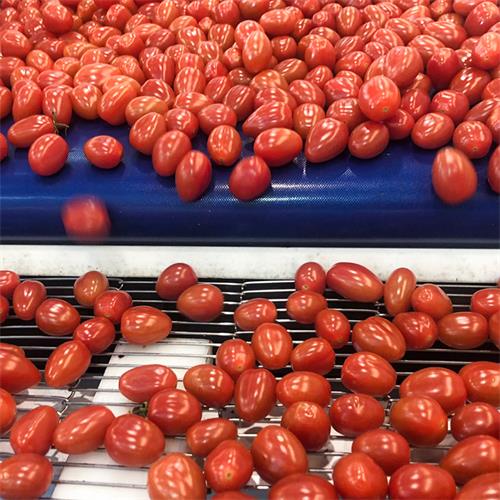
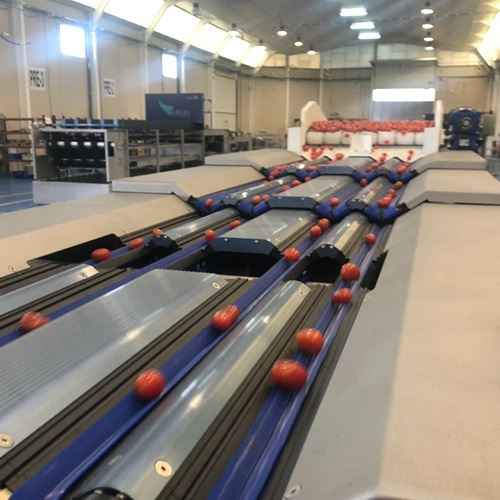
The AGICO tomato sorting machine is a modular grading platform for processors that need to inspect external quality and separate tomatoes into defined commercial grades. Individual roller carriers keep products spaced and rotate them continuously as they pass the inspection zone. This presentation exposes multiple surfaces to the vision system instead of showing only the top face, supporting near-360° external inspection when the fruit is correctly singulated and rotating.
The system can classify by color, diameter, shape, weight, density, and external quality, depending on the selected equipment and recipe. Detectable conditions may include skin blemishes, bruises, abrasions, cracking, insect damage, misshapen fruit, and softness. Actual results depend on tomato variety, defect visibility, lighting, feed stability, and the thresholds agreed for the project. At AGICO, we recommend defining acceptable and reject samples before finalizing lane count, cameras, software recipes, weighing, and outlet arrangement.
Key Sorting and Inspection Features
The practical value of each feature depends on tomato presentation, required grades, and the connected packing process.
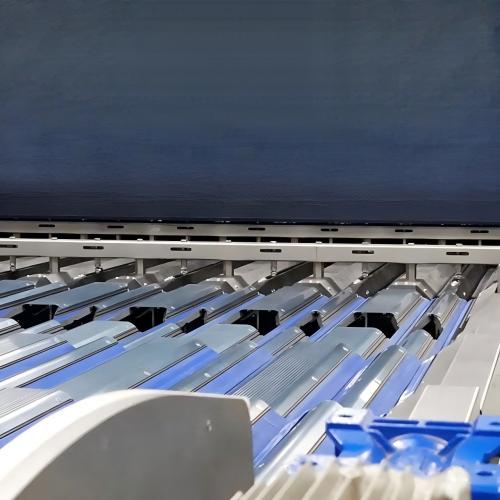
Rotating Roller Carriers
Each tomato is supported individually and rotated through the viewing area. Stable spacing reduces overlap and gives the inspection system more consistent surface access, provided incoming flow is evenly distributed.
Multi-Criteria Vision Sorting
Recipes can combine color, diameter, shape, and visible external-quality thresholds. The buyer should define which variations are saleable, which need secondary use, and which must be rejected.
Optional Weighing and Data
Dynamic electronic weighing can add individual weight as a grading criterion. Production statistics, grade reports, and pack-out monitoring help operators compare recipe output and track the distribution of grades during a shift.
Configurable Lanes and Outlets
Single-, dual-, or multi-lane arrangements and the number of sorting outlets can be matched to required throughput and pack-out. This affects footprint, operator access, downstream accumulation, and utility planning.
AGICO Technical Data
| Parameter | Specification |
| Product Presentation | Individual roller carriers with continuous product rotation |
| Surface Inspection | Multi-angle, near-360° external inspection |
| Grading Criteria | Color, diameter, shape, weight, density, and external quality |
| Detectable Defects | Skin blemishes, bruises, abrasions, cracking, insect damage, misshapen fruit, and softness |
| Individual Weighing | Dynamic electronic weighing available |
| Throughput | Configuration-dependent |
| SLS/DLS Reference Capacity | Approximately 1–8 metric tons/h |
| Large Multi-Lane System | Custom-engineered according to lane count and tomato size |
| Lane Configuration | Modular single-, dual-, or multi-lane arrangement |
| Sorting Outlets | Configurable according to required grades |
| Control System | Industrial computer with touchscreen interface |
| Sorting Parameters | Operator-adjustable recipes and defect thresholds |
| Data Functions | Production statistics, grade reports, and pack-out monitoring |
| Construction | Food-grade, washdown-compatible industrial construction |
| Electrical Supply | Project-specific |
| Installed Power | Project-specific |
| Machine Dimensions | Customized according to lane count, outlets, and factory layout |
The table describes AGICO technical configurations, but it does not define one universal machine size. Final throughput, electrical supply, installed power, dimensions, lane count, outlet count, and inspection scope must be confirmed before quotation and purchase. The approximate 1–8 metric tons/h SLS/DLS reference capacity depends on the selected arrangement, tomato size, feed uniformity, grading recipe, and discharge plan; larger multi-lane systems are engineered around the project.
A useful configuration brief includes minimum and maximum tomato diameter, hourly and daily input, number of saleable grades, representative defect photos, acceptable tolerances, packaging format, and the factory layout. Upstream washing or drying must deliver fruit without excessive overlap or free water that could disturb imaging. Downstream bins, conveyors, or packing tables must accept the planned grade flow without blocking an outlet. Our team will normally review these interfaces together because a sorter cannot maintain line performance if feeding and pack-out are mismatched.
Inspection and Grade Separation
Two physical zones determine whether the configured recipe becomes a practical packing result.
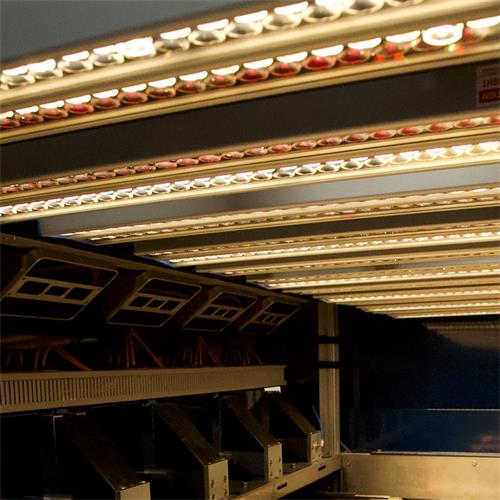
Vision Inspection Zone
Controlled lighting and fruit rotation support multi-angle surface analysis.
As the carriers rotate tomatoes, the system acquires external views and compares measured characteristics with the active recipe. Clean viewing surfaces, stable illumination, correct spacing, and representative thresholds are essential. Defects hidden by stems, contact points, moisture, or overlap may not be presented in the same way as exposed surface defects.
Configurable Discharge Lanes
Each accepted recipe decision must lead to a usable collection or packing destination.
Outlets can be assigned to premium, standard, processing, undersize, oversize, or reject streams according to the project. Buyers should confirm how quickly each stream is removed, how full containers are exchanged, and whether tomatoes may drop or collide. Outlet design therefore affects product handling as much as software classification.
Sorting Workflow, Changeover, and Cleaning
Feed and Singulate: Introduce tomatoes at a controlled rate so individual carriers receive one product wherever possible. Operators monitor bunching, wet fruit, leaves, and damaged pieces that can disturb presentation.
Rotate and Inspect: The rollers turn each tomato through the illuminated inspection area. Cameras or sensors collect the views required by the selected grading criteria.
Classify and Weigh: The industrial computer applies operator-adjustable recipes and defect thresholds. When included, dynamic weighing adds individual weight to the decision.
Discharge and Report: Tomatoes transfer to configured grade outlets while production statistics, grade reports, and pack-out data support shift monitoring. Operators should investigate abrupt grade-distribution changes rather than assuming the recipe alone is responsible.
Clean and Change Over: Isolate electrical and pneumatic energy before cleaning. Remove plant debris and residues, protect sensitive optical and electrical areas, clean washdown-compatible surfaces according to the site procedure, and inspect rollers, lighting windows, weighing components, and outlets before restart. AGICO can review changeover access and sanitation requirements during project engineering.
Tomato Sorting Machine FAQ
-
What throughput should be specified?
Throughput is configuration-dependent. The SLS/DLS reference range is approximately 1–8 metric tons/h, while larger systems are engineered by lane count, tomato size, recipe, and outlet plan.
-
Can the system find every visible defect?
Recipes can target the listed external conditions, but performance depends on presentation, surface visibility, lighting, fruit variation, and agreed thresholds. Representative acceptable and defective samples are important for configuration.
-
How many grades and outlets are possible?
The outlet count is configurable. Define the commercial grades, reject stream, packaging destinations, and expected share of each grade so the physical discharge arrangement can be engineered.
-
What information is needed for a quotation?
Provide tomato-size distribution, input rate, defect definitions, sample images, required grades, weighing and reporting needs, shift pattern, utilities, washdown practice, available floor plan, and upstream and downstream equipment.
Hot Tags: tomato sorting machine, China tomato sorting machine manufacturers, suppliers, factory