
Industrial Orange Cutter Machine Overview
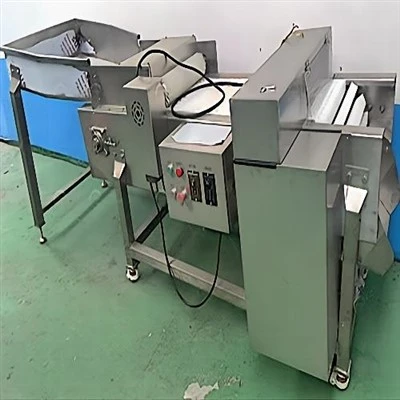
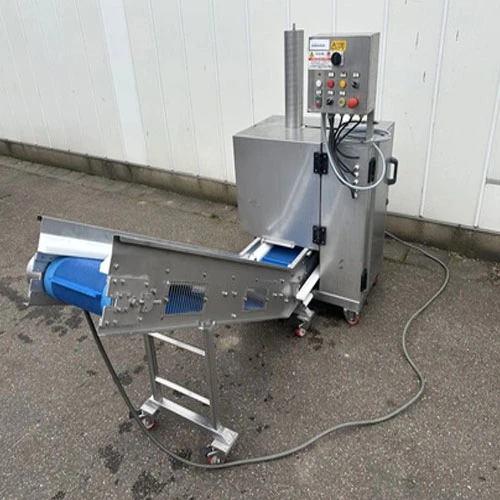
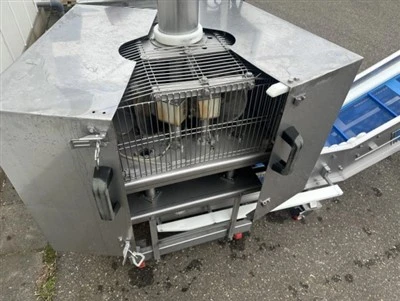
The AGICO orange cutter machine divides round fruit into uniform radial wedges through a vertical push-through cutting arrangement. An operator loads each orange through the feeding tube, the product passes through the selected blade assembly, and cut pieces leave the enclosed chamber on an automatic belt conveyor. Available cutting configurations produce 4, 6, 8, or 12 wedges. Processing capacity is 30–40 fruits per minute, equivalent to approximately 1,800–2,400 fruits per hour under suitable feeding and fruit conditions.
The machine is intended for buyers who need controlled wedge geometry rather than random chopping. Fruit diameter must match the feeding tube and blade set, so size grading remains important before production. The guarded cutting area, safety protection, emergency stop, independent machine and conveyor controls, stainless-steel construction, and caster-mounted frame support integration into a preparation or packing line. Actual selection should begin with orange diameter, required wedge count, input rate, discharge height, voltage, and the next receiving operation.
-
30–40Fruits Per MinuteWith suitable sizing and steady manual loading
-
4–12Wedge OptionsFour available radial cutting configurations
Key Features for Controlled Wedge Cutting
-
Vertical Feeding and Radial Cutting
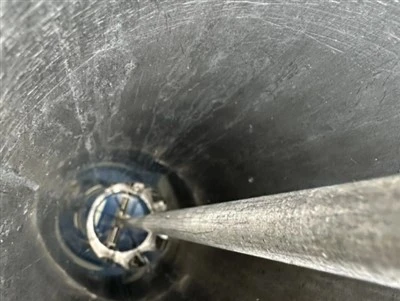
The vertical tube guides each manually loaded fruit toward the radial blade set. This direct path helps maintain cut orientation, provided the orange diameter is matched to the configured feed and blade components.
-
Selectable Wedge Geometry
Blade configurations for 4, 6, 8, or 12 wedges allow the equipment to serve different food-service, packing, or further-processing specifications. Wedge count and fruit size should be defined together.
-
Guarded Cutting Chamber
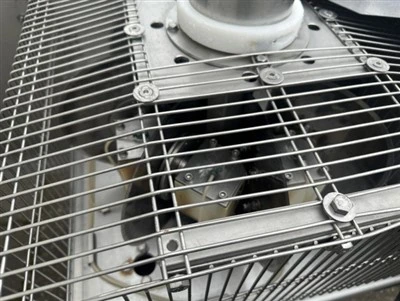
An enclosed cutting chamber, safety guard, and emergency stop separate the blade area from normal operating positions. Site procedures still need to cover training, inspection, isolation, and authorized access.
-
Independent Machine and Conveyor Control
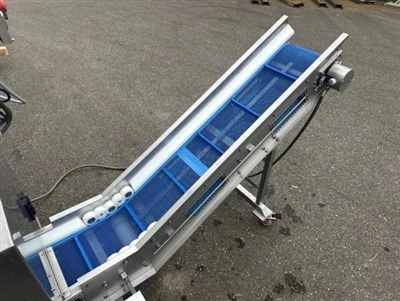
Separate controls help operators coordinate cutting and discharge with downstream receiving. The stainless-steel machine and caster-mounted conveyor can be positioned for production, cleaning, or line-layout adjustment.
AGICO Technical Data
Configuration should be based on actual fruit samples and the required finished wedge specification. AGICO will normally request the diameter range, target wedge count, expected hourly input, power supply, conveyor direction, discharge height, and receiving method before confirming the machine arrangement.
| Parameter | Specification |
| Processing Capacity | 30–40 fruits/min |
| Equivalent Output | Approximately 1,800–2,400 fruits/h |
| Cutting Configuration | 4, 6, 8 or 12 wedges |
| Cutting Method | Vertical push-through radial cutting |
| Number of Cutting Stations | Up to 12 stations, depending on configuration |
| Feeding Method | Manual loading through the vertical feeding tube |
| Discharge Method | Automatic belt conveyor |
| Machine Dimensions | Approximately 900 × 900 × 1,600 mm, excluding the extended conveyor |
| Power Supply | 380–400 V, 50 Hz, 3 phase; customizable |
| Machine Material | Food-grade stainless steel |
| Blade Material | Food-grade stainless steel |
| Fruit Size Range | Customized according to the orange diameter |
| Control System | Independent machine and conveyor controls |
| Safety Protection | Enclosed cutting chamber, safety guard and emergency stop |
| Mobility | Caster-mounted machine and conveyor |
| Applicable Products | Oranges, lemons, apples, pears, tomatoes, onions and similar round produce |
4 wedges: larger sections for direct serving or further trimming.
6 wedges: a balanced option for medium portion sizes.
8 wedges: smaller portions for packing or food preparation.
12 wedges: finer division where fruit diameter and firmness are suitable.
Applications and Production-Line Integration
Oranges are the primary application, but the same cutting principle may be configured for lemons, apples, pears, tomatoes, onions, and similar round produce when size, firmness, skin condition, and finished-cut requirements are compatible.
Conveyor Discharge and Receiving
Keep the downstream stage ready for the cutter's discharge rate.
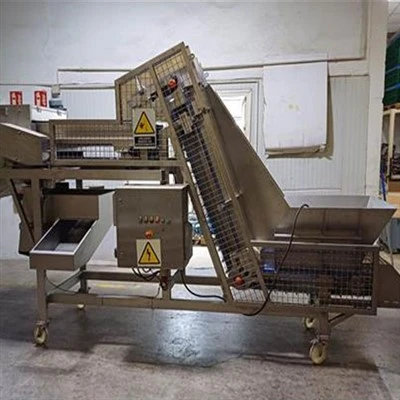
The automatic belt transfers wedges away from the cutting chamber and can feed inspection, packing, seasoning, juicing, or another preparation stage. Confirm conveyor direction, working height, available floor space, and whether the next machine can accept approximately 1,800–2,400 fruits per hour. A receiving bottleneck can interrupt manual loading even when the cutter itself is correctly configured.
Fruit Preparation and Product Changeover
Grade round produce before loading and reassess the blade set when the product changes.
Remove unsuitable fruit and separate large diameter differences before feeding. When changing from oranges to another product, AGICO recommends checking tube clearance, blade geometry, firmness, expected cut quality, and cleaning access rather than assuming one setup fits every round ingredient. Trial samples can clarify whether the target product enters reliably and leaves without unacceptable crushing or tearing.
How the Orange Wedge-Cutting Process Works
01
Grade and Prepare the Fruit
Sort oranges by the approved diameter range and remove damaged, irregular, or unsuitable fruit. Consistent sizing helps the feeding tube guide each orange toward the blade assembly.
02
Load Through the Vertical Tube
The operator loads fruit manually into the tube. Feeding rhythm should remain steady without forcing oversized fruit or reaching into protected areas.
03
Push Through the Radial Blade Set
The configured blade assembly divides the fruit into the selected number of wedges inside the enclosed chamber. Guards and the emergency stop form part of the machine's protection system.
04
Discharge, Clean, and Check
The conveyor carries wedges to the receiving stage. Before cleaning or blade inspection, isolate the machine according to site procedures. Remove residues from accessible food-contact areas, inspect the blade set and tube, confirm guards and controls, and only then prepare for restart or product changeover.
Hot Tags: orange cutter machine, China orange cutter machine manufacturers, suppliers, factory